Food and Drink
 Shopping
 Transportation
 Accommodation
 Useful Tips
 By city
 By Interests
 Pre-departure Guides
 Travel Updates

Distinctive bookstores in China are shaped as much by their surroundings as by the stories on their shelves. Some inhabit once-silent ancestral halls, churches, and village meeting places — proof that a building, like a story, can always turn a new page. Others take bold contemporary forms, mirroring the mountains, rivers, and skylines outside their walls.
A few have earned global acclaim: Zhongshuge in Chongqing, hailed by Architectural Digest as the “world’s most majestic bookstore,” and Librairie Avant-Garde in Nanjing, described by Global Design News as the “world’s most beautiful bookstore” for its transformation from a former air-raid shelter turned parking garage. Yet some of the most rewarding discoveries are the quieter, more intimate spaces, where books sit within layers of history, architecture, and community that give each place its character.
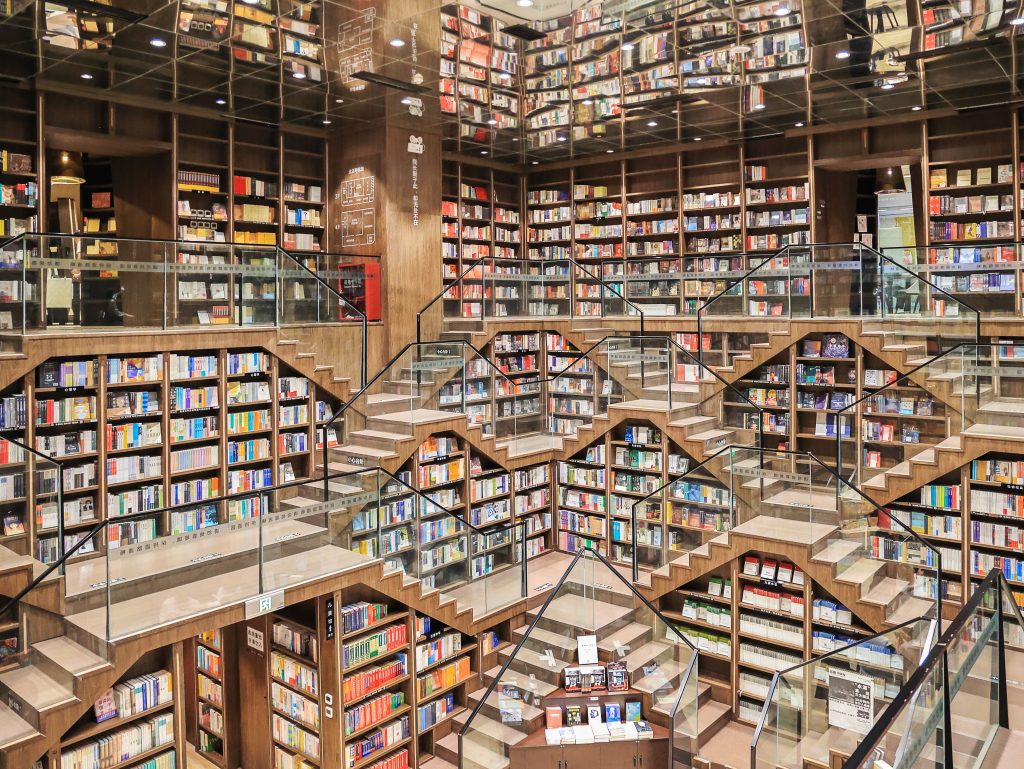
Here are some lesser-known bookstores in China that our travel designers have found especially memorable — and that travelers can explore as part of a WildChina journey.
Pioneer (Avant-Garde) Bookstore, Songyang, Zhejiang
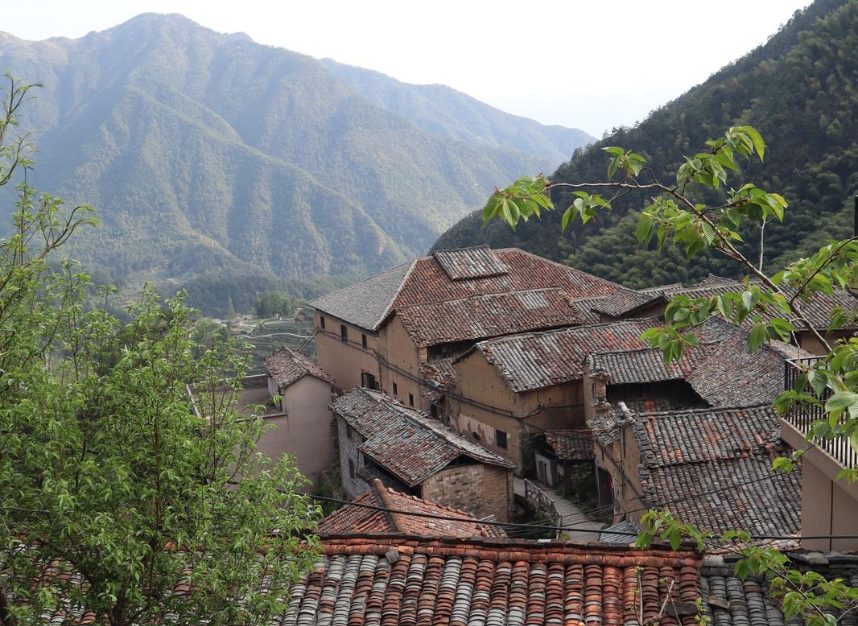
Perched 800 meters above sea level and accessible only by winding mountain roads, Chenjiapu is a small village in Songyang, Zhejiang province, with just over a hundred houses. For centuries, life here has moved to the steady rhythms of farming.
In recent years, Songyang has entered a quiet renewal. As part of WildChina’s GUDAO (ancient hiking trails) initiative, forgotten footpaths are being restored, reconnecting villages and landscapes once linked by these routes. Meanwhile, many of its rammed-earth buildings have also found new purpose, including Chenjiapu’s former cultural hall — now home to the Pioneer (Avant-Garde) Bookstore.
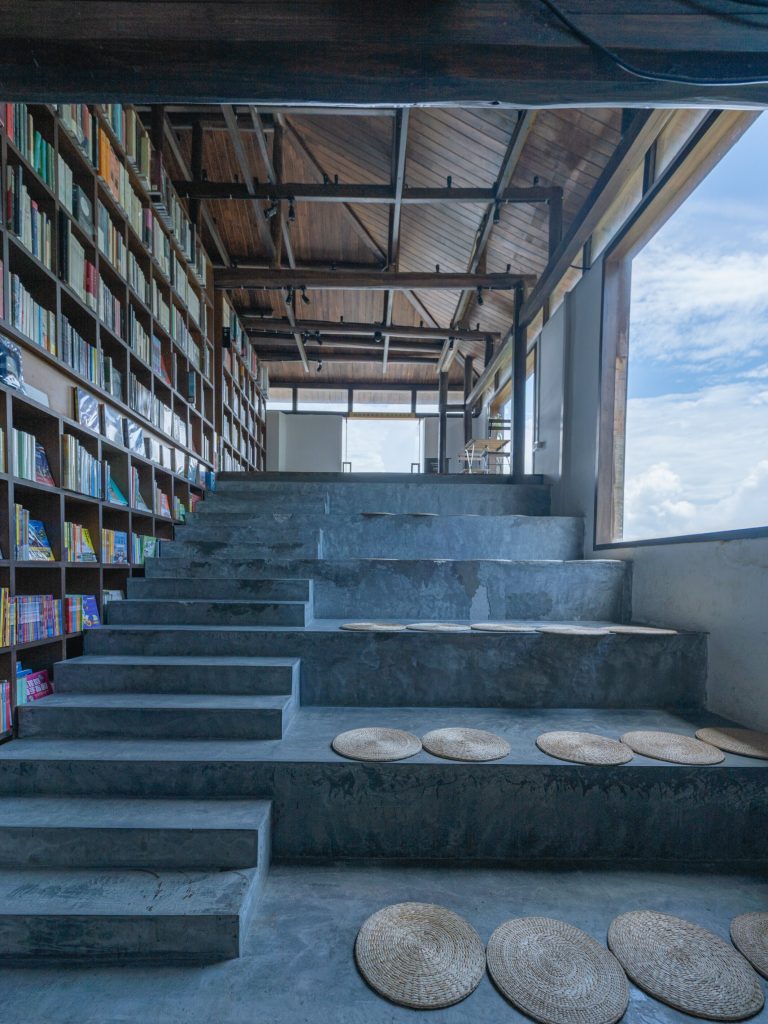
From the outside, its earthen walls and clay-tiled roof echo the dwellings around it. Step inside, and the space opens onto sweeping views of bamboo valleys and terraced hillsides through expansive windows at the valley’s edge.
Its collection leans toward poetry, culture, and rural studies, with a “Songyang Cultural Zone” dedicated to local history. A small café serving coffee and waffles invites visitors to linger, while the viewing platform makes the landscape itself part of the reading experience.
On a WildChina journey through Songyang, time at the bookstore — one of the more off-the-beaten-path bookstores in China — becomes part of a deeper exploration of village life. Travelers can cycle through terraced tea fields with a local guide, share noodles in a centuries-old teahouse with its young owner, or step inside a working brown sugar factory to see how a once-declining craft is being reimagined for today.
WildChina recommended book pairing: Lisa See’s The Tea Girl of Hummingbird Lane — a novel rooted in the traditions of tea-growing villages. Though set in Yunnan, the story of rural life, family, and global change echoes Songyang’s own path of renewal.
Address: Chenjiapu Village, Songyang County, Zhejiang (浙江省松阳县陈家铺村)
Mofan Bookstore, Beijing
Tucked in a hutong (narrow alleyway) in Beijing’s Xicheng District, Mofan Bookstore inhabits the city’s earliest Anglican church, a brick chapel built in 1907 during the late Qing dynasty. With timber vaults, pointed arches, and stained-glass windows, the chapel brings vertical grandeur to the otherwise low-slung hutong lanes.
Its shelves highlight literature, art, theater, history, and the social sciences, along with a selection of rare historic volumes. Visitors are drawn as much to the atmosphere as to the books. Long wooden pews now function as communal reading benches, lined with green-shaded lamps that recall old libraries. Chandeliers glow against the pale timber vaults, while tall stained-glass windows scatter colored light across the nave.
On a journey through Beijing with WildChina, a visit here can be part of a deeper immersion into hutong life — stepping into a family courtyard for stories of old Beijing, sharing breakfast as the lanes fill with the calls of baozi (steamed buns) vendors, or watching a game of mahjong unfold between neighbors.
WildChina recommended book pairing: Folding Beijing by Hao Jingfang, translated by Ken Liu. This Hugo Award–winning novelette envisions the city itself folding into three worlds that take turns inhabiting the same space. Much like the transformation of this church into a bookstore, it’s a meditation on how environments can be reshaped and redefined. (Available to read online in Uncanny Magazine, Issue Two.)
Address: 85 Tonglinge Road, Xicheng District, Beijing (北京市西城区佟麟阁路85号)
Zhongshuge Bookstore, Dujiangyan, Sichuan
Northwest of Chengdu lies Dujiangyan, where an ancient irrigation system — today recognized as a UNESCO World Heritage site — has sustained Sichuan for more than two millennia. Amid this backdrop of water and history, Zhongshuge, China’s most celebrated design-driven bookstore brand, has created one of its most memorable bookstores.
Unlike the historic bookstores previously highlighted, this one sits inside a modern shopping mall. Its appeal lies not in age-old architecture, but in the way its contemporary design mirrors Sichuan’s landscapes. Mirrored ceilings expand the sense of space, multiplying shelves into vast galleries, while arcs of dark wood sweep across the room. The reading tables extend these curves, their lines inspired by the rivers that define the city.
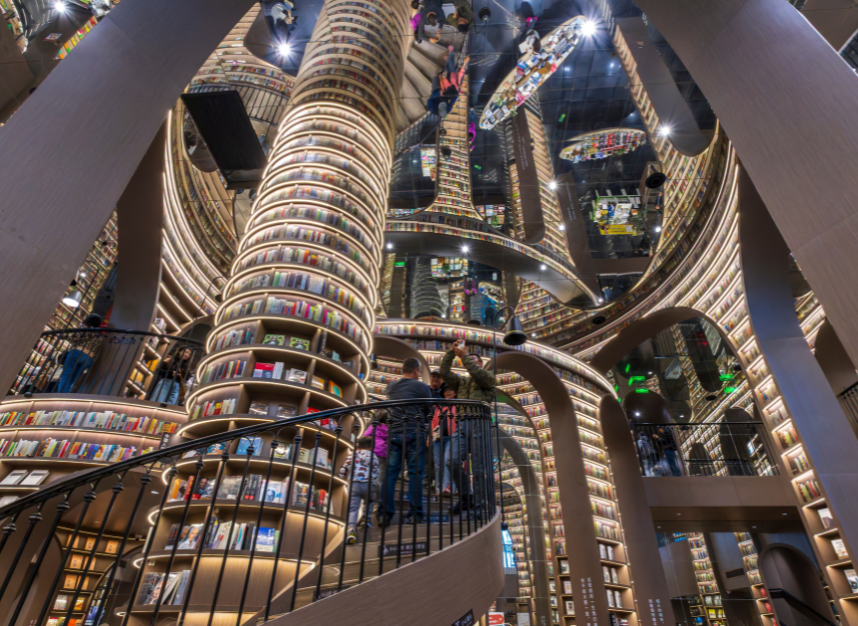
The bookstore also acts as a community hub. On the ground floor, bamboo-inspired shelves and panda motifs create a playful children’s area, while upstairs, quiet reading nooks and balconies invite families to gather and students to study — reflecting the family-friendly spirit of China’s panda capital.
After a hands-on experience preparing panda snacks with keepers at Dujiangyan Panda Base, or a hike on nearby Qingcheng Mountain, WildChina travelers can enjoy a private transfer to Zhongshuge Bookstore, to unwind in a setting where Sichuan’s landscapes intertwine with imaginative design.
WildChina recommended book pairing: For this setting, we recommend River Town by Peter Hessler — a portrait of a river town on the Yangtze that reflects Dujiangyan’s long tradition of living in balance with water.
Address: 2F, Rongchuangmao (Sunac) Mall, 1 Zhizhen Road, Dujiangyan, Chengdu, Sichuan (四川省都江堰市至臻路1号融创茂2楼)
Bishan Bookstore, Huangshan, Anhui
In the mountain-fringed village of Bishan in Anhui’s Yi County, a former Qing-dynasty merchant’s residence has been reimagined as a bookstore. Once an ancestral hall where coffins were laid and even cows sheltered, the building was restored in 2014 and given new life under the guidance of curator and writer Ou Ning, as part of his Bishan Project, a wider effort to bring art, literature, and discussion into village spaces.
Its Hui-style architecture endures in whitewashed walls, dark-tiled eaves, and carved wooden beams, now framing shelves of books on rural life, culture, and craft. Espresso machines and Wi-Fi bring modern comforts into the old residence, while sunlight falls across a courtyard that invites locals and visitors to gather for readings and discussions. The Bishan Bookstore has become a stage for community life, hosting exhibitions and workshops with local artisans.
On a WildChina journey through the villages of Anhui, a visit to Bishan Bookstore can be paired with cycling along centuries-old lanes and fields, pausing at family-run sugar and tofu workshops, or meeting artisans keeping Huizhou crafts alive. With WildChina, these moments go beyond the storefront — opening conversations and uncovering the living stories that continue to shape Anhui’s traditions.
WildChina recommended book pairing: Utopia in Practice: Bishan Project and Rural Reconstruction by Ou Ning — while in the very place he envisioned, readers can explore his writings on how Bishan became a model of cultural revival and rural reconstruction.
Address: Bishan Village, Biyang Town, Yi County, Huangshan, Anhui (安徽省黄山市黟县碧阳镇碧山村)
Books for the journey
WildChina’s own reading list offers another way to deepen an understanding of China. From memoirs to works of history, these books provide context that enriches any journey, turning time on the page into part of the travel experience itself.
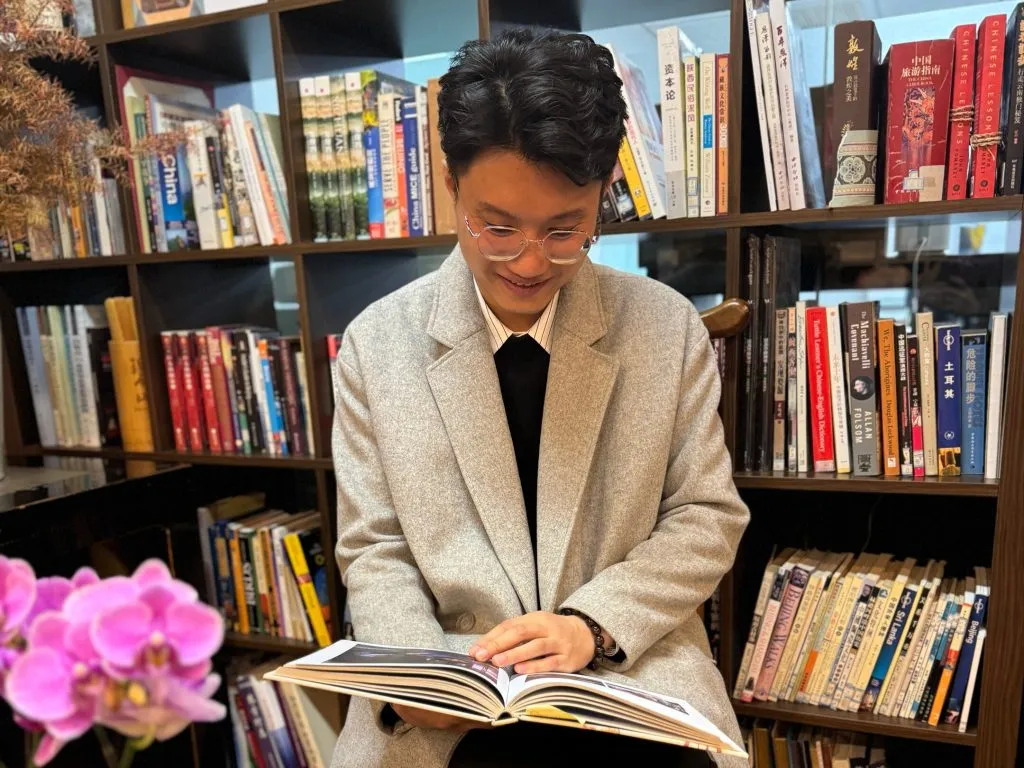
For those who want to keep reading once the journey ends, the WildChina Book Club features curated reading lists and author conversations that open new windows onto China’s culture and heritage.
Books, like journeys, open paths into unfamiliar worlds. On a WildChina journey, travelers can explore these remarkable bookstores in China along the way — places where architecture, history, and community turn reading into part of the travel experience itself. Get in touch with our travel designers to start planning a story-filled adventure across China.
By Gabrielle Keepfer