Food and Drink
 Shopping
 Transportation
 Accommodation
 Useful Tips
 By city
 By Interests
 Pre-departure Guides
 Travel Updates

On a stroll through Guangzhou neighborhoods, eyes inevitably alight upon freshly roasted geese hanging behind glass windows, clouds of steam billowing from rice noodle roll steamers, and crosshatched pineapple buns glowing on trays in bakery storefronts — scenes that define Cantonese food in daily life. From the streets of Guangzhou to Chinatowns around the world, dishes like these regularly appear on family tables and in restaurants alike.
One of the Eight Great Traditions of Chinese Cuisine, Cantonese (sometimes referred to as Yue) cuisine emphasizes preserving the natural flavors and freshness of ingredients, achieved through careful steaming, stir-frying, sautéing, and simmering. Rooted in Guangzhou and the wider Pearl River Delta, including Hong Kong and Macau, the cuisine has evolved over more than 2,000 years. It is among the most internationally recognized Chinese cuisines, carried abroad by emigrant communities from Guangdong to the United States, Europe, Southeast Asia, and Australia.

Cantonese cuisine reflects a long tradition of whole-animal cooking, extending well beyond prime cuts of meat. Alongside chicken, pork, and beef, dishes often feature offal, chicken feet, pig tongue, and intestine, valued as much for texture as for flavor. Though gentle in profile, the cuisine relies on a range of sauces, including oyster, hoisin, and plum, along with rice wine, vinegar, and sesame oil. Spices are used sparingly; garlic, star anise, and white pepper appear occasionally to enhance the natural qualities of the ingredients. These principles are perhaps best understood through the rhythm of a day spent eating Cantonese food.
Morning: yum cha
The day begins unhurriedly with a mid-morning visit to a dim sum parlor, where a server arrives with a steaming pot of tea. Jasmine, pu’er, oolong, and chrysanthemum teas are the most common companions at the dim sum table.
The tradition, known as yum cha in Cantonese and translated as “drink tea,” originated in teahouses along ancient trade routes in Guangdong during the Tang Dynasty, offering weary travelers a place to rest and refresh themselves. Today, dim sum parlors remain open throughout the day across Guangdong and Hong Kong, though the experience is mostly enjoyed by families during leisurely weekend mornings.
Late morning: dim sum staples
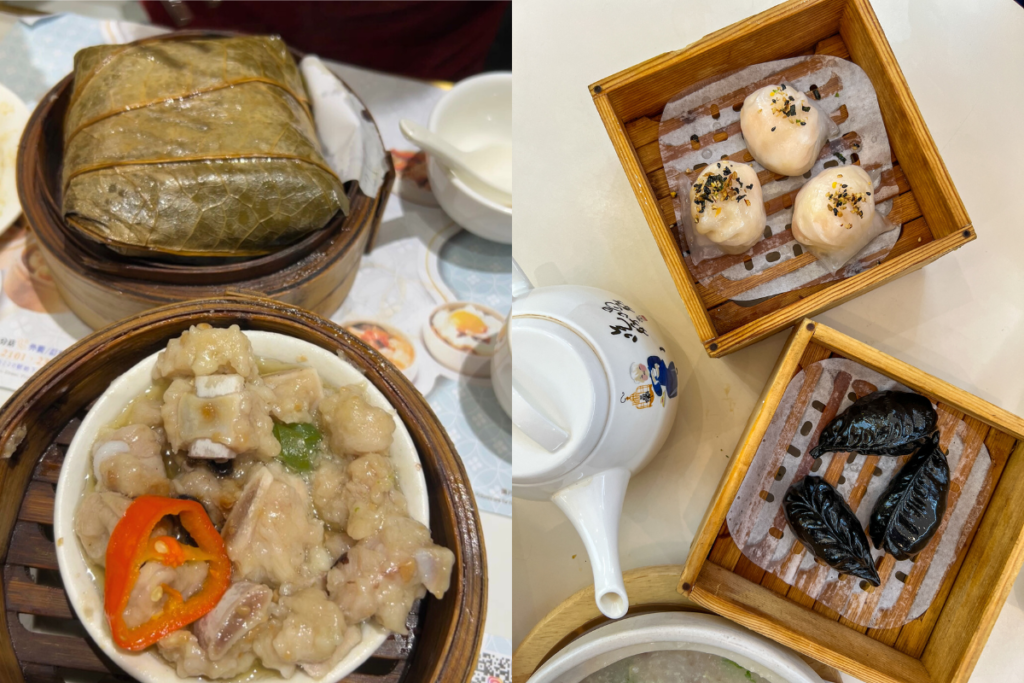
Small plates of delicately prepared dishes are as central to the dim sum experience as tea and the company of loved ones. With an emphasis on fresh ingredients and the precise preparation that is characteristic of Cantonese cuisine, dim sum packs rich flavor into modest portions.
Har gow, shrimp dumplings wrapped in translucent, starchy skins, pair well with a light dip of soy sauce. Cheung fun, rice noodle rolls filled with shrimp, beef, char siu, or crisp youtiao (fried dough), arrive splashed with a generous ladle of soy sauce. Chicken feet, or feng zao, marinated in a sweet and mildly spicy black bean sauce, and pork spare ribs, or pai guat, steamed with fermented black beans and ample garlic, are longtime favorites, the meat cooked until exceptionally tender and falling easily from the bone.
Fried and baked dishes are equally beloved at dim sum. Lo bak go, rectangular cakes made from grated radish and rice flour batter, often stuffed with Chinese ham, arrive sizzling from the grill with a satisfying crunch to their exterior. Egg tarts, known for their flaky crusts and lightly sweet custard, round out the meal.
Afternoon: wonton noodles
In the late afternoon, attention turns to a lighter fare. Wonton noodles, an enduring Cantonese comfort dish, fit the moment. Plump shrimp and pork wontons sit alongside gai lan, or Chinese broccoli, atop springy egg noodles in a clear, aromatic broth traditionally prepared with dried flounder. To achieve their signature al dente texture, the noodles are blanched for mere seconds. Now a staple of Hong Kong cuisine, the dish was popularized during World War II by people who fled from Guangdong to Hong Kong.
Evening: claypot rice and home cooking
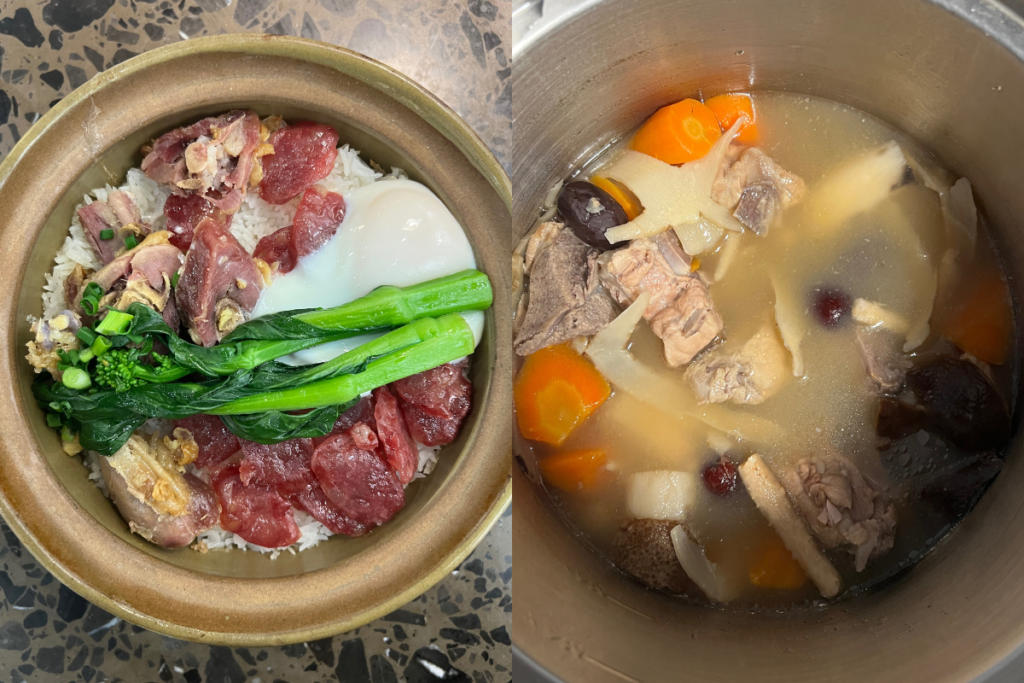
In the evening, palates turn toward more robust flavors. Claypot rice, known as bou zai faan in Cantonese, warms faces and stomachs in the colder months. Juicy meat juxtaposes the crisp bottom layer of rice, a crust formed through careful control of heat and moisture throughout the cooking process.
To aid digestion before dinner, clear, aromatic broth simmered with meat, seasonal vegetables such as winter melon, lotus root, and radish, fruits including red dates, goji berries, and longan, and occasionally medicinal ingredients like Chinese yam and lotus seeds, is typically consumed.
Brewed for hours, slow-cooked soup is a cornerstone of Cantonese cuisine; its depth achieved as the nutrients and flavors of the ingredients slowly infuse the broth. In the humid climate of the Pearl River Delta, Yue communities believe that soups made with carefully chosen ingredients help lower internal “heat,” restore balance, and ease various ailments. In many households, these carefully prepared broths appear at the dinner table at least once a week.
At the table: shared dishes
Served alongside the soup in family homes are several dishes spanning a range of flavors, from simple steamed egg to sharp stir-fried bitter melon with beef, all characteristically light but never lacking in flavor.
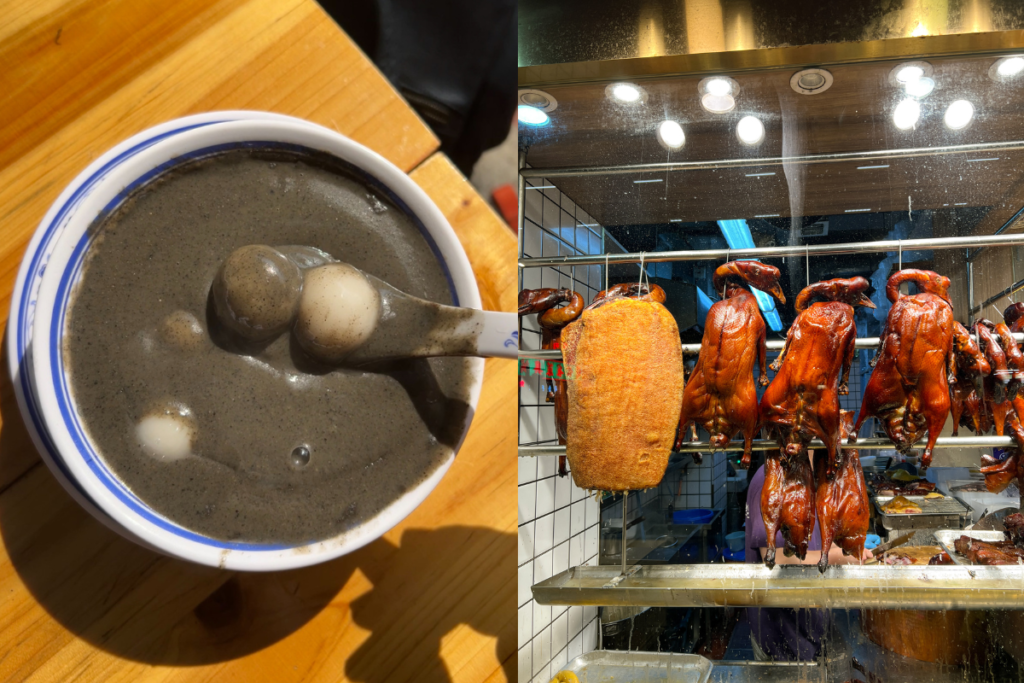
Although roasting is less common in everyday Cantonese cooking, barbecued meats known as siu mei are a quintessential part of the culinary landscape. From siu yuk, roasted pork belly with thick skin that cracks with each bite, to char siu, five-spice pork covered in a honey glaze, these meats are cooked on spits over open flames or in large rotisserie ovens, developing a depth of flavor distinct from other Cantonese preparations. Often served with rice and vegetables as an easy takeaway meal, siu mei also holds a place of honor at family celebrations such as weddings and festivals.
For dessert, mild flavors with just a hint of sweetness reign supreme. Black sesame paste, made from freshly ground black sesame seeds and often paired with tangyuan, is a winter favorite. In summer, gwai ling gou, or tortoise shell jelly, a medicinal herbal dessert typically served with melted brown sugar or condensed milk, offers a cooling contrast to the heat.
To encounter these flavors where they originated is to understand the cuisine beyond the plate. Traveling through the region with WildChina offers a way to experience Cantonese food as it continues to be lived today. Get in touch with our travel designers to learn more about journeys shaped around local food traditions and the places they call home.
By Yanny Liang