Food and Drink
 Shopping
 Transportation
 Accommodation
 Useful Tips
 By city
 By Interests
 Pre-departure Guides
 Travel Updates

What’s trending in travel in China right now extends beyond the country’s best-known landmarks. The Great Wall, the Terracotta Warriors, and the Forbidden City remain among the country’s most significant and sought-after experiences. But increasingly, the questions landing in our travel designers’ inboxes point to a widening range of interests. Travelers want to know where they can hike outside the best-known routes. They want to understand what “high-tech China” looks like in practice. They want to understand the country not only through its icons, but also through the stories and experiences shaping it today.
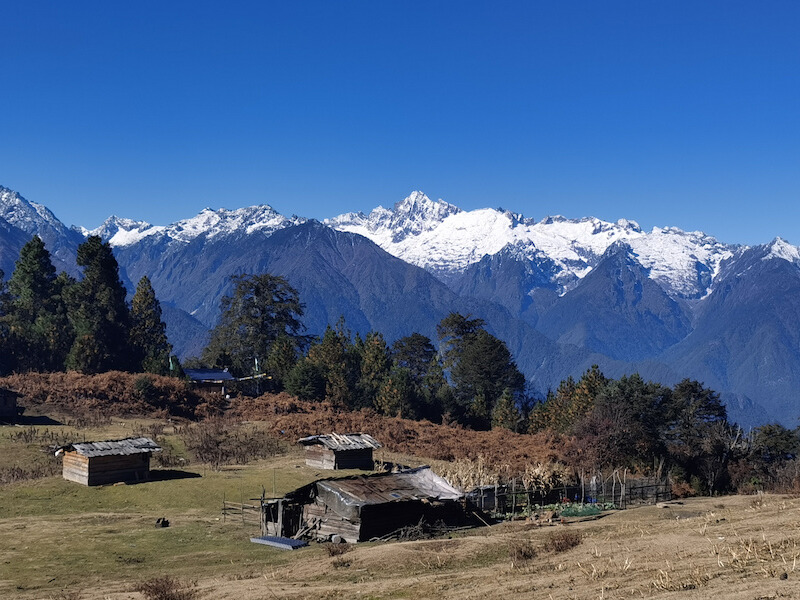
Hiking in Yunnan
While China is often first associated with its historic landmarks and cities, more travelers are beginning to look toward its natural landscapes as well. Hiking is one of the biggest areas of interest right now, especially in Yunnan. The province is home to some of China’s most striking scenery, with snow-capped mountains, deep gorges, and highland villages.
But many travelers are looking for more than a hike with a beautiful view. They want a route with a story, marked by the people who have walked it. WildChina’s GUDAO experiences offer a deeper way into the region, rooted in the ancient roads and horse caravan trails that once linked villages and mountain communities. In terrain set apart by mountains and distance, these paths were vital routes for trade, travel, and daily exchange.
Across these journeys, hiking is about more than scenery, though there is plenty of that. One route follows stretches of the Tea Horse Road through remote villages and historic trade corridors. Another crosses Biluo Snow Mountain in the Three Parallel Rivers region, where dramatic alpine terrain meets layers of local history and belief. A third traces the upper trails of Tiger Leaping Gorge before continuing into places like Daju and Shangri-La, where the old routes open onto village life and Tibetan culture.
For travelers drawn to hiking in China, Yunnan remains one of the most compelling places to explore on foot, and some of its most rewarding routes lie beyond the best-known trails.
Zhangjiajie
Zhangjiajie is another destination appearing more often in travelers’ plans. With the most recent Avatar film released in December 2025, the landscape that first entered the global imagination through the franchise still holds a strong pull. For many, the interest begins with the images that circulate online and on screen: towering sandstone pillars, sheer cliffs, and scenery that seems almost otherworldly.
WildChina’s Zhangjiajie journey offers more than a single cinematic viewpoint. It moves through the full range of the region’s terrain, from the sandstone pillars of Zhangjiajie National Forest Park and Wulingyuan Scenic Area to the dramatic heights of Tianmen Mountain. Along the way, travelers encounter places like Golden Whip Stream, where a forested trail winds beneath the peaks, and Yellow Stone Village, where sweeping views open across the surrounding cliffs and karst formations. The Hundred Dragon Elevator, cliffside glass skywalk, and the world’s longest cable car then bring the landscape into view from another angle entirely.

High-Tech China
High-tech China is another area travelers are increasingly curious about. Some are interested because of what they have read about robotics, AI, electric vehicles, or smart cities. Others simply want to understand how technology is influencing life in China today.
WildChina’s high-tech tour offers a thoughtful lens on how innovation connects to business, infrastructure, and daily life. That might mean experiencing XR, exploring smart equipment hubs, or even riding in driverless taxis through city streets. The journey looks not only at the technology itself, but also at the systems behind it and the way Chinese cities function day to day.
For many travelers, this becomes one of the most surprising parts of being in China today. Technology shows up in the ordinary details of daily life: paying with a QR code, unlocking a shared bike with a phone, ordering food through an app, or boarding a high-speed train.
Chongqing
Some travelers first discover Chongqing through images of trains passing through apartment buildings, layered highways cutting across hillsides, and futuristic skylines. Built across steep mountains at the confluence of the Yangtze and Jialing rivers, this vertical city is dramatic, fast-moving, and visually unforgettable.
WildChina’s Chongqing journey offers more than the skyline views so often shared online. The city becomes more interesting when explored through its wartime history, its older neighborhoods, and the everyday spaces where local life still unfolds.
Moving beyond the postcard image of Chongqing might mean spending time at Jiaotong Teahouse, where the spirit of old Chongqing still lingers, or stopping at Graffiti Street, where urban art turns an entire neighborhood into an open-air canvas. It can also mean engaging with the city’s role in the Second World War through visits tied to the Sino-American alliance, including the Stilwell Museum and Flying Tigers Museum, before sitting down to hotpot in a former wartime air-raid tunnel.
What makes Chongqing so fascinating is not only that it looks futuristic. It is that the city holds so many different histories at once.
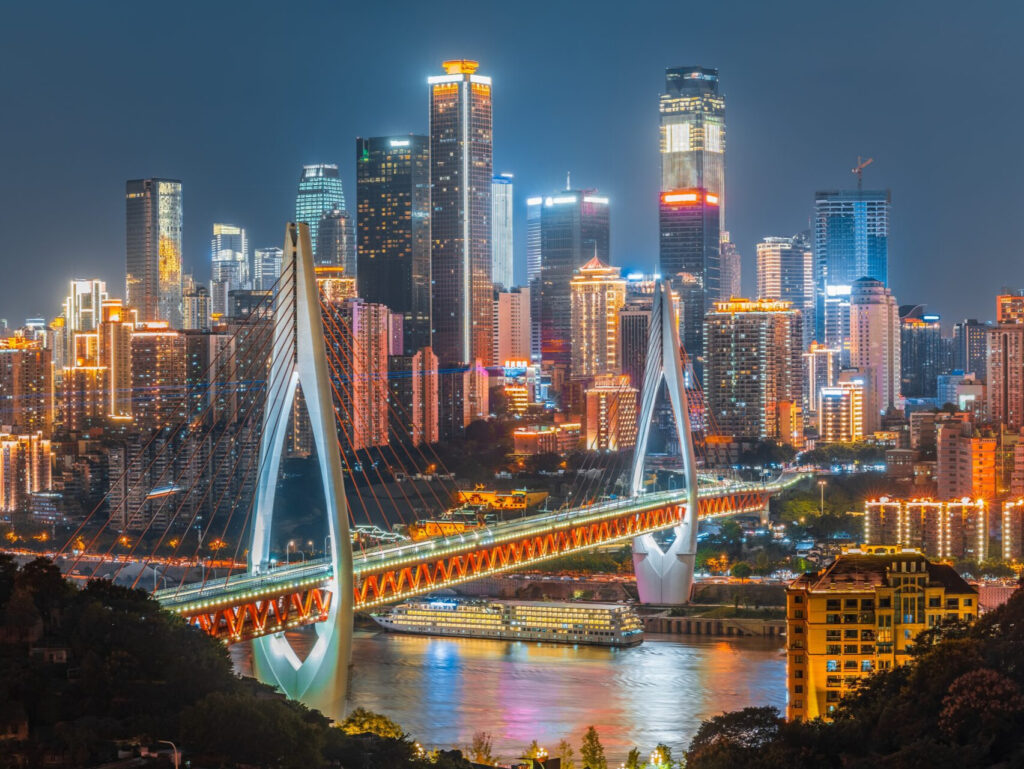
Travelers are looking for experiences with the same depth, context, and specificity that have long defined the way we design journeys. In 2026, that means ancient trails in Yunnan instead of more crowded hiking routes. It means high-tech experiences that offer context rather than just buzzwords. It means Chongqing seen not only as an internet sensation, but as a city with character and complexity.
Get in touch with WildChina’s travel designers to start planning a journey that moves beyond the landmarks and into the places and stories that make China so compelling right now.
By Gabrielle Keepfer