Food and Drink
 Shopping
 Transportation
 Accommodation
 Useful Tips
 By city
 By Interests
 Pre-departure Guides
 Travel Updates

The unsolved murder of Pamela Werner in 1937 remains one of Beijing’s greatest mysteries. Pamela, a young British woman living in Beijing, was brutally killed just days before the city’s imminent invasion. Her body was discovered near the historic Fox Tower, and despite extensive investigations by both Chinese and British detectives, the case remains unresolved.
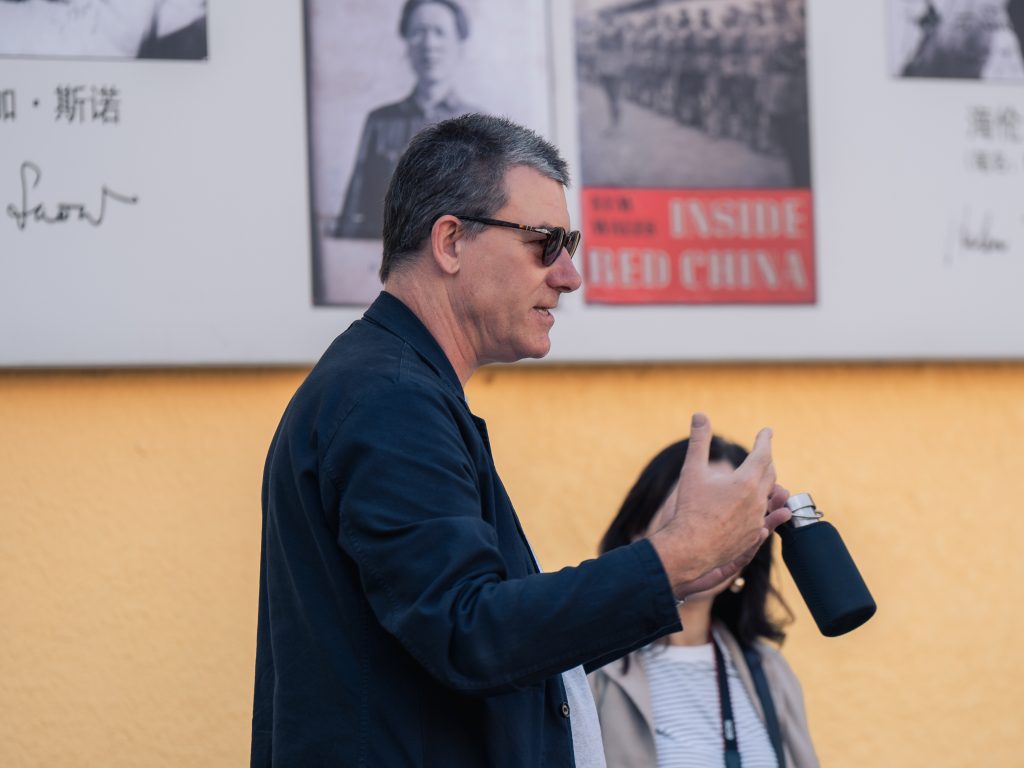
To explore this pivotal chapter of the city’s past, we spoke with Paul French, the author of Midnight in Peking, a true-crime book that uncovers the events surrounding Pamela’s death. Through his exhaustive research and exploration of hidden archives, Paul has brought Pamela’s life and untimely demise to light, revealing a poignant side of Beijing’s past.

Here’s what Paul shared with us about his research, the fascinating journey into 1930s Beijing, and the deeper understanding of this historic crime:
How did you first come across Pamela Werner’s story, and what about it compelled you to investigate further?
I was looking through old newspapers from the 1930s, what we call “China Coast” newspapers published in English and other languages in Shanghai, Tianjin and other treaty ports back then. I wasn’t looking for anything particular — just ideas and inspiration. I saw the headlines about Pamela’s murder in January 1937 and was intrigued. I pulled at the strings and found it was an unsolved murder, but that it had been investigated by a Chinese detective and a British detective working together, which was unique. I thought maybe it would make a good magazine article, so I dug deeper and eventually the story obsessed me and became Midnight in Peking as more and more lost evidence, forgotten theories and documents reappeared.
Where did you begin with your research? What resources proved most valuable in uncovering the details of this decades-old mystery?
I started with the old newspapers. These led me to find the autopsy reports and other documents on the main suspects that were held in the archives of the old British and American legations in Beijing. Those led me to the UK National Archives where I discovered the forgotten papers of Pamela’s father, the former China diplomat E.T.C. Werner. Those files held a wealth of treasure in terms of information and, I believe (as laid out in the book), the answer to who killed Pamela Werner.
Your book weaves together crime, history, and the atmosphere of 1930s Beijing. How did you balance the detective work with bringing the city itself to life?
Well, at first, I was swamped with information – more than I could have imagined possible. But it’s important to keep the story moving forward, to select the best information to drive the story of the investigation onwards and engage the reader. While there were so many side streets, rabbit holes and tangents, you have to be disciplined and resist them (though ultimately, I wrote a small book of further stories from Midnight in Peking – Badlands – to tell some of them) in order to write a good book. Secondly, for me, the book was also about Beijing in the 1930s, the life of the hutongs, the interactions between the “foreign colony” (as it was known back then) and the local Chinese community, and especially about the fear and anticipation of the Japanese attack on the city in July 1937. Pamela’s murder occurred at a time of great terror and tension; it really did symbolize, for many, the final days of a China that would soon cease to exist. Things never went back to how they were before Pamela was killed.
Without giving away any major spoilers, what was the most surprising or unexpected source of information you uncovered during your research?
When I started, I had no idea that Pamela’s father – often described as a very cold and distant father – would end up dedicating his life to uncovering her murderers and leave a trail of documents and evidence in the archives long after his death, after everyone had forgotten him and Pamela. I thought it would be a story of two detectives from different cultures working together to hunt a killer and being thwarted by the Japanese onslaught against China. And essentially, that is the first half of the book – but the second half is Pamela’s father’s quest which I found to be a remarkable story as he battled against the odds: official intransigence and obstruction, threats, the Japanese occupation of the city, bankruptcy, ill health and ultimately internment in a civilian POW camp for the duration of the war.
The book vividly brings to life locations like the Legation Quarter and the Fox Tower. How did walking these streets help you piece together Pamela’s world? What traces of that era can visitors still feel or see today?
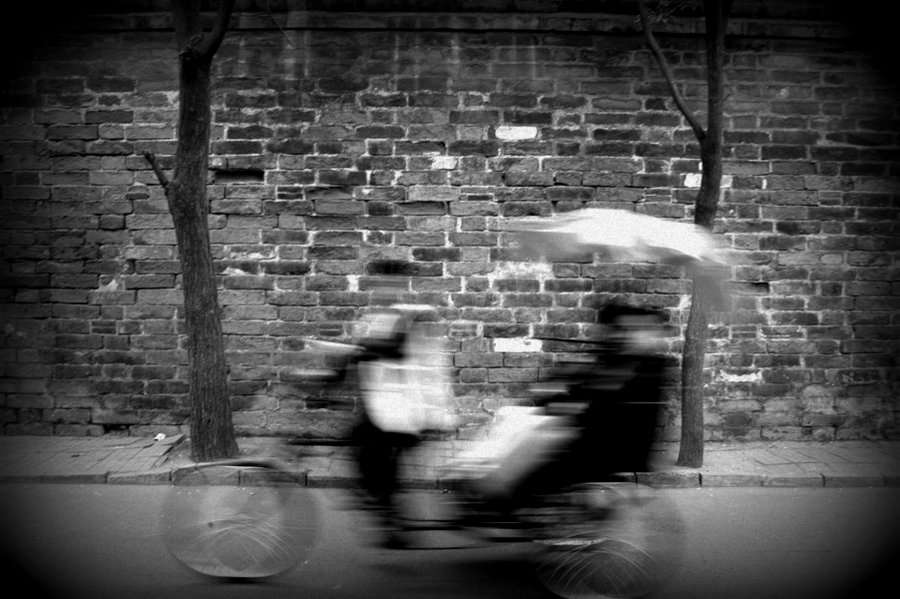
Remarkably, despite significant changes to Beijing’s cityscape over the decades, many of the locations I had come to write about still remain. Notably, Pamela’s old home on Kueichiachang Hutong (Armour Factory Alley), just behind Beijing Railway Station. Also intact is Dongbianmen, known back then as the Fox Tower, where her body was discovered. It’s the last remaining corner tower of the old Tartar Wall and an impressive building. It is a little more visited now, but back in the early 2000s when I was researching Midnight in Peking, it was mostly deserted, and quite eerie at night. The wall itself is significant, and standing before it, you can get a sense of how imposing it must have been in 1937 when it encircled the imperial city — enclosing the Forbidden City, the Legation Quarter and thousands of hutongs, following the route of today’s Second Ring Road. Enter the Fox Tower compound and you can see a surviving portion of the Tartar Wall and appreciate not only its height, but also its width—around 15 meters or so. In 1937, foreign residents rode their horses along this stretch of wall beside the legation Quarter and Chongwenmen (then Hatamen Street) to watch the sun rise over the Temple of Heaven.

For those joining the Midnight in Peking walking tour, what hidden stories or overlooked details of old Peking will visitors discover — things even longtime Beijing residents might not know?
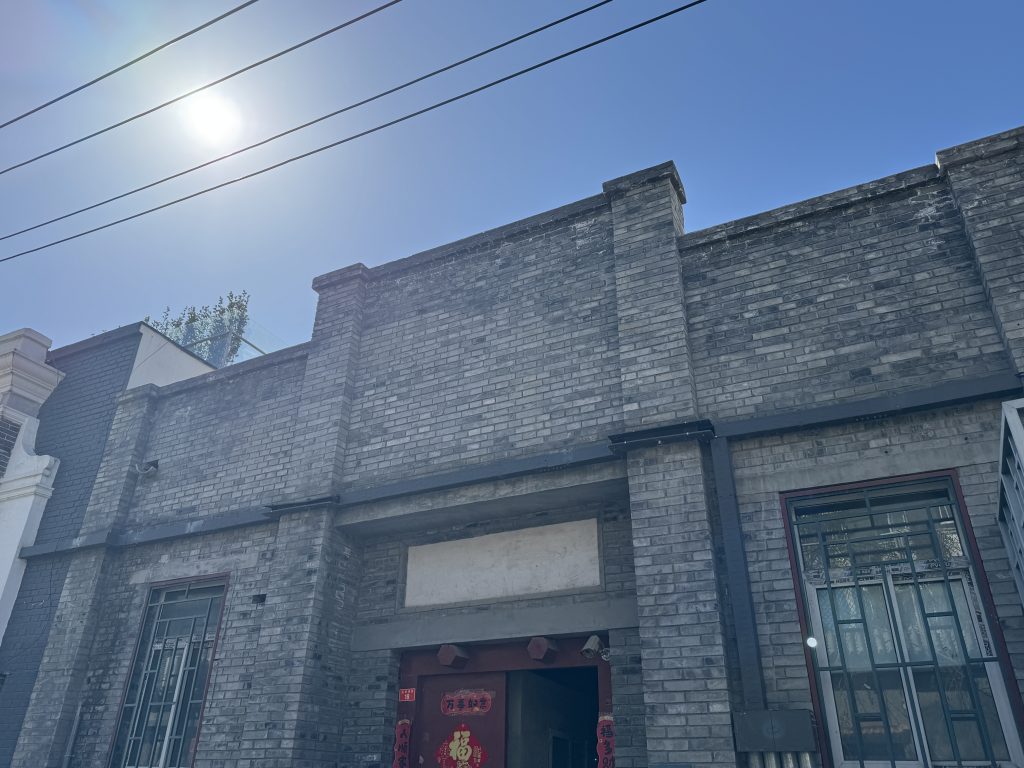
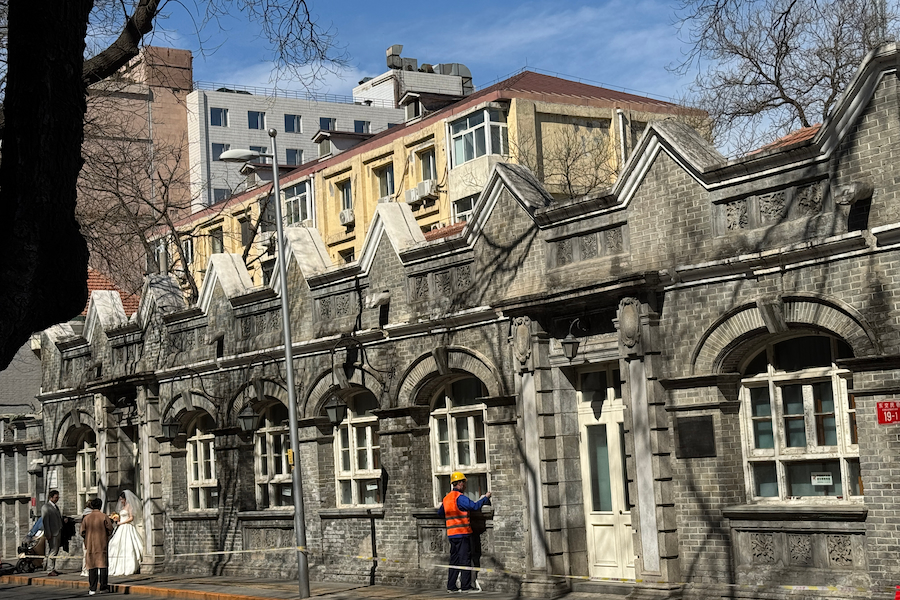
I think the intersection of Chuanpan and Hougou hutongs is a little-known area for visitors. This was the old “Badlands”, a district frequented by foreign soldiers and those “slumming it” for the night. It was a warren of bars, restaurants, brothels and opium dens. But it’s also interesting for other reasons.It’s one of the last hutong areas built in Beijing, mostly in the twentieth century, and so displays modernist architectural flourishes you won’t find anywhere else in the older hutong laneways. It is also home to the old Asbury Church (Chongwenmen Church), still an active place of worship, that was once an “island in a sea of despair” amid the Badlands, offering refuge to drug addicts, lost souls and unwanted babies from the surrounding district. The area sits between the more respectable hutongs around the base of the Fox Tower and the protected, privileged Legation Quarter as a former red light district for the Foreign Colony.
Beyond the mystery itself, what deeper understanding of Beijing’s past do you hope people gain from exploring these locations?
Shanghai has accumulated all the reputation as a “Sin City” in China – and mostly deserves the accolade. But there was more to the foreign world of Beijing than missionaries, diplomats, and scholars. It too had its wild side, its seamy quarters. The foreigners in Beijing are often portrayed as respectable, but there were also criminals and ne’er-do-wells hiding out in the hutongs. And Pamela’s murder — awful as it was, and a personal tragedy for the Werner family — was symbolic of the fear rife in Beijing at the time of Japan’s imminent invasion. If such a brutal crime could go unsolved in plain sight, it raised troubling questions about what lay ahead for everyone in Beijing.
In your Midnight in Peking walking tour, visitors experience the city through the lens of 1937’s greatest mystery. On your new journey following Wallis Simpson, you explore Beijing, Tianjin, and Shanghai through the glamour and shadows of the 1920s. What parallels do you see between these two histories, and what can travelers expect from this new journey?
Wallis, like Pamela, is a foreigner sojourning in China at a crucial time – 1924 and 1925 were years of extraordinary upheaval. While she journeyed through China, Hong Kong was consumed by labor strikes; political factionalism left bodies on the streets of Guangzhou; the Zhejiang-Jiangsu warlords battled each other in First World War like trench conditions around Shanghai; and massive rains brought outbreaks of cholera, typhoid, and hunger. In Beijing, Puyi, the Last Emperor, was expelled from the Forbidden City; Dr Sun Yat-sen’s death left a deep political vacuum; and banditry, piracy, and constant skirmishes between Nothern Warlords destabilized the capital.
Although Wallis, as a well-off American traveler, lived in a largely privileged bubble in China, she was not blind or ignorant to the turmoil around her. She noted the dead and wounded of the warlord wars, while also noting the guns and ammunition sold to them to perpetuate the battles by European and American arms dealers. She noted the sorrow of the people at the passing of Dr Sun, and the poverty and suffering of much of the population, even while she was experiencing an almost unimaginable level of glamour — in the ballroom of the Grand Hotel de Pekin, the cocktail bar of the Palace Hotel in Shanghai, and the restaurants of the Victoria Hotel on Guangzhou’s Shamian Island. In that sense, detailing both the tragedies and the excesses of 1920s China, Wallis is a perfect guide to understanding and appreciating China between the world wars.
For those looking to step into the past and explore the haunting mystery of Pamela’s death, WildChina invites guests to join the Penguin Books exclusive Midnight in Peking walking tour, an immersive journey through the heart of old Beijing.
Additionally, for those interested in exploring the glamour and shadows of China’s 1920s, WildChina offers an expert-led journey with Paul French himself, following Wallis Simpson’s experiences in Beijing, Tianjin, Shanghai, and Guangzhou. Get in touch with us to secure a place.
Interview by Gabrielle Keepfer
A special thanks to: Paul French