Food and Drink
 Shopping
 Transportation
 Accommodation
 Useful Tips
 By Destination
 By Interests
 Pre-departure Guides
 Travel Updates

The sandstone pillars of Zhangjiajie inspired the floating mountains in Avatar and still form the image of the region most recognised around the world. Yet Zhangjiajie’s cultural life extends far beyond its viewpoints. In the foothills between these peaks, inside a dedicated creative park and community workshops, the Tujia people maintain a weaving tradition that has shaped their identity for more than three millennia: xilankapu, the Tujia brocade.
A language of patterns: the history of Tujia brocade
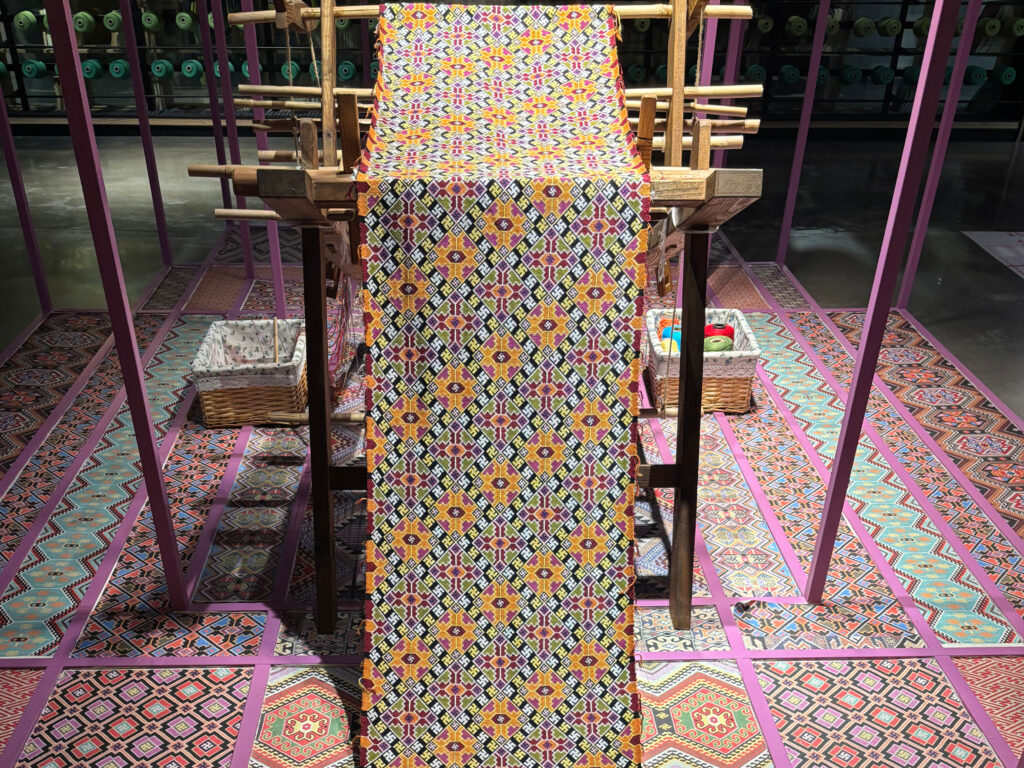
Tujia brocade traces its origins to the ancient Ba people, who lived across the Wuling Mountains more than 3,000 years ago. It developed in what is now the northwestern uplands of Hunan, a region that links the country’s heartland plains with the mountains of the southwest. In these highland communities, weaving served as both a domestic skill and a way to preserve memory.
Long before patterns were written down, families passed motifs directly from one generation to the next. Diamonds signified abundance. Stepped patterns mirrored the surrounding terraced hills. Spirals expressed energies believed to protect the home. Historical records mention more than 400 traditional motifs, though around 160 survive today, each carrying traces of the worldview that shaped it.
In the Tujia dialect, the brocade is known as xilankapu, meaning “flower-patterned cover”, a reference to the breadth of designs woven into the craft. This heritage was formally recognized in 2006 when Tujia brocade was added to China’s first national intangible cultural heritage list.
Inside Zhangjiajie’s weaving centers
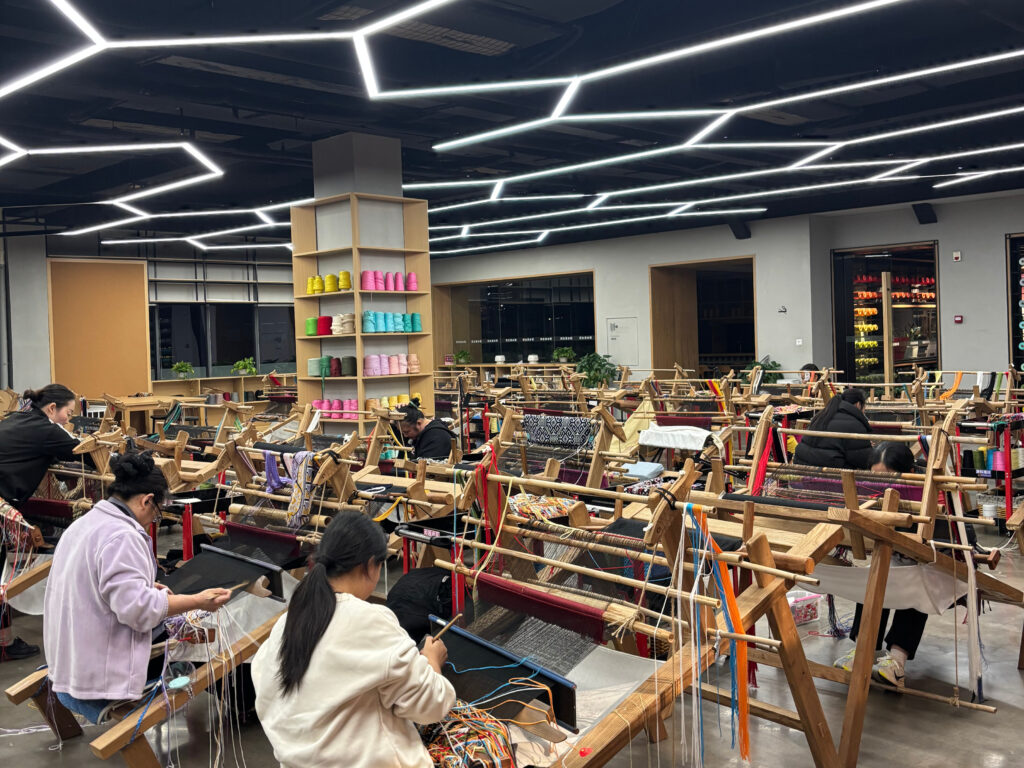
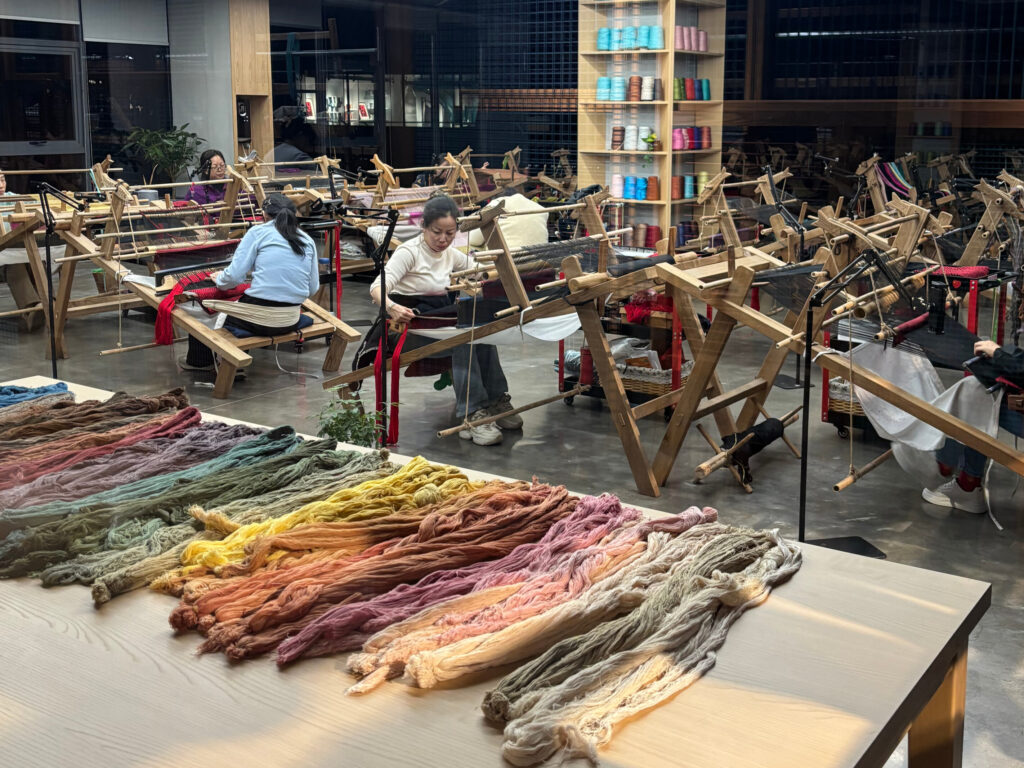
Stepping inside a Tujia brocade weaving studio reveals rows of wooden looms stretched across the room, where artisans sit at their stations guiding threads through a precise structure of warp and weft.
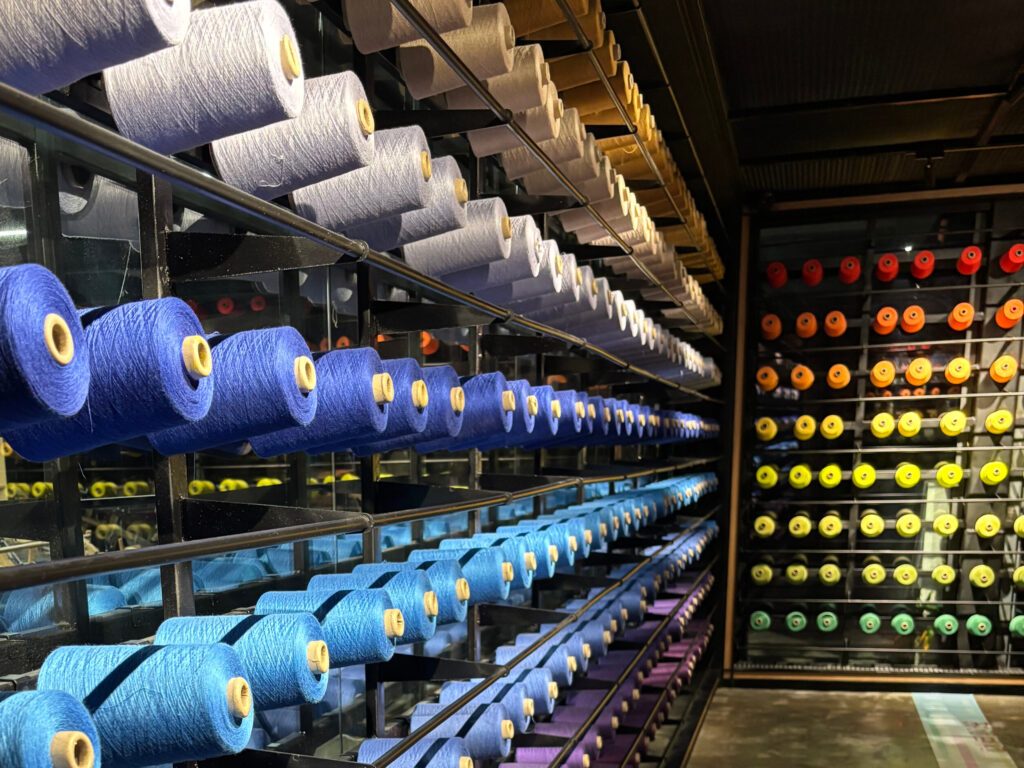
The process begins with dyeing cotton or silk threads, using plant-based techniques practiced in the region for centuries. Once dried, the threads are wound onto spools that line the workshop walls in a range of muted and vivid tones. These colors determine the clarity and balance of every motif that will later appear on the loom.
At the looms, the workshop follows a calm and steady rhythm. Foot pedals lift and separate the warp lines. Wooden frames settle under tension. Artisans guide the thread through narrow channels where the pattern forms row by row. Many weave from memory, drawing on knowledge learned from parents and grandparents. The work is deliberate and exacting, and a single textile may take weeks to complete.
A living practice in Zhangjiajie
Much of the preservation and innovation around the craft takes place at the Zhangjiajie Tujia Brocade Creative Park, a large cultural complex established in 2014. The park includes weaving studios, a plant-dye workshop, a brocade research institute, a design library, and an upcoming brocade art museum intended to serve as an international center for handwoven arts.
The park and its community partners now operate more than 600 looms and train over 400 students each year. These efforts are part of a broader rural revitalization initiative that supports artisans in continuing and adapting the craft.
The revival has expanded the possibilities for xilankapu. Contemporary studios now produce more than 600 types of brocade-based works, including apparel, accessories, home décor, framed artworks, and collaborative pieces designed with cultural institutions. Lighter silk versions appear as scarves and shawls exchanged during festivals. Larger textiles are commissioned for boutique hotels and exhibition spaces in Zhangjiajie, where their geometry echoes the surrounding cliffs and ridges. Through these evolving uses, xilankapu maintains its symbolic language while finding new relevance in daily life.
Tujia brocade is both an inheritance and a practice that continues to grow. It holds centuries of memory yet adapts through the hands of each new generation. For travelers interested in experiencing this heritage firsthand, WildChina can arrange visits to a weaving studio, where artisans share their tools, techniques, and the stories woven into each pattern. Get in touch with our travel designers to explore how xilankapu can be part of a deeper journey into Zhangjiajie’s cultural landscape.
By Gabrielle Keepfer