Food and Drink
 Shopping
 Transportation
 Accommodation
 Useful Tips
 By city
 By Interests
 Pre-departure Guides
 Travel Updates

Motion is often associated with China’s major cities through constant flow and development, while rural destinations are imagined as static or slow. In the mountainous southwest of Zhejiang, Songyang is shaped by a different kind of movement that unfolds through everyday use of its land and paths.
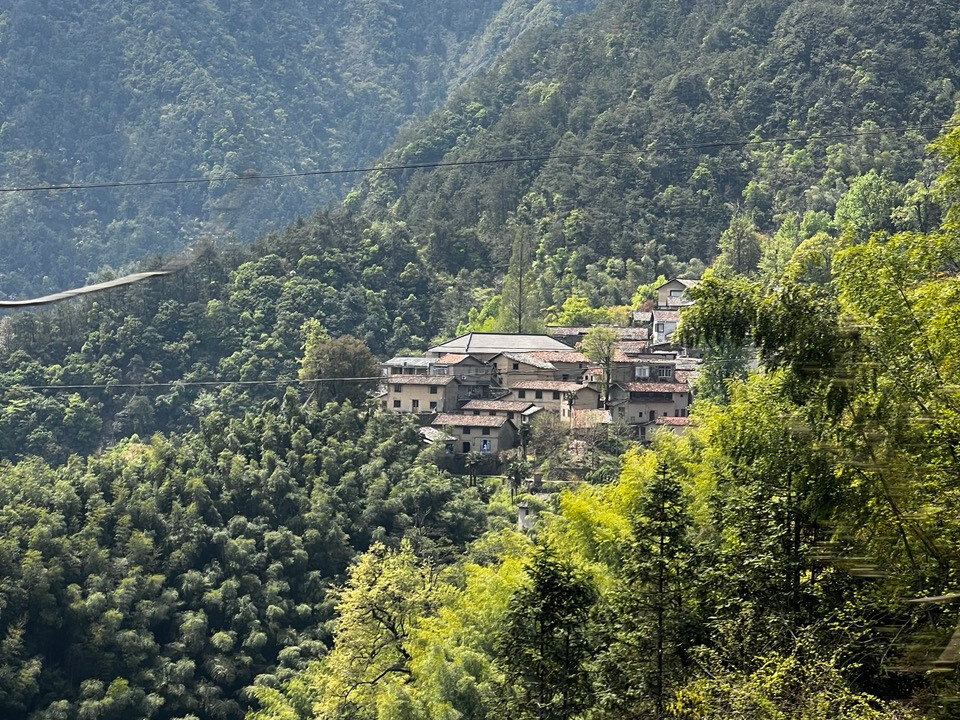
Reaching Songyang makes this shift clear. From Shanghai, the high-speed train reaches Lishui in a few hours. Speed then gives way to curvature as the road climbs into the hills, narrowing as it goes and threading through bamboo groves where small settlements appear and disappear with each bend.
Movement at Ground Level
At ground level, movement is human. Tea growers work the fields. Villagers move between rammed-earth houses and narrow plots of land along footpaths that cut through the hills. Shopkeepers step in and out of doorways. Farmers carry baskets, tools, and produce between home, field, and market.
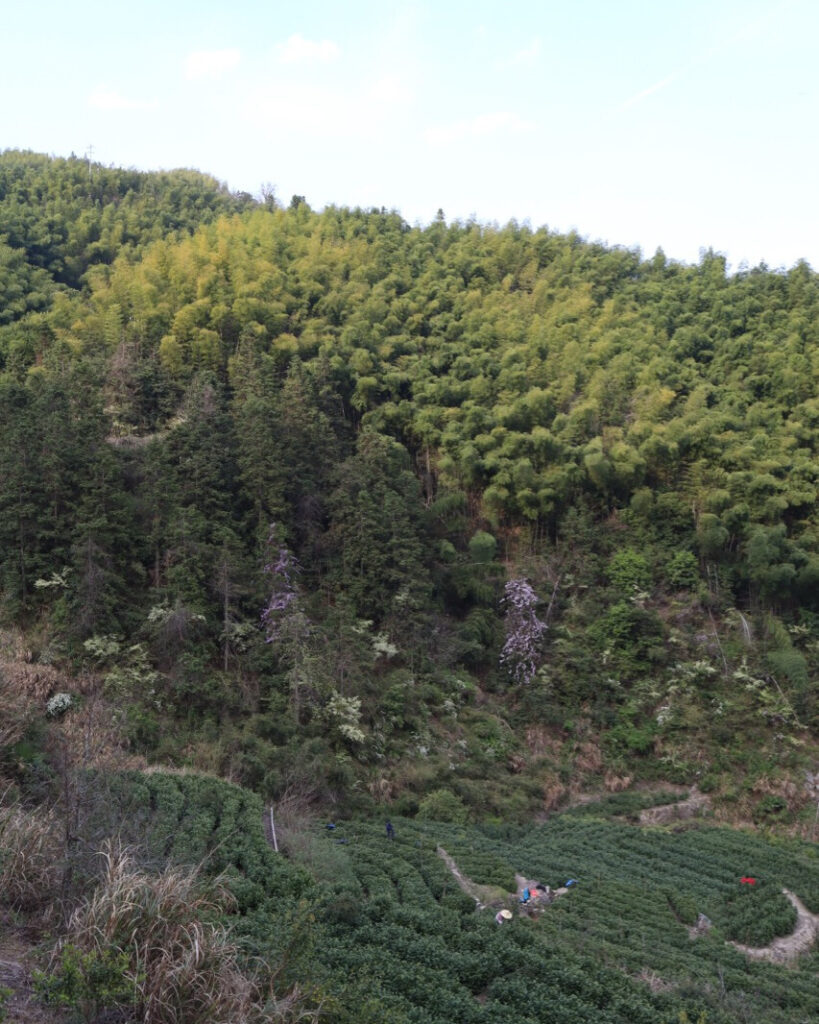
What this reveals is a place organized around daily use. There is no single point of arrival. Songyang is experienced as a series of connected spaces shaped by routine, proximity, and season.
Moving With the Landscape
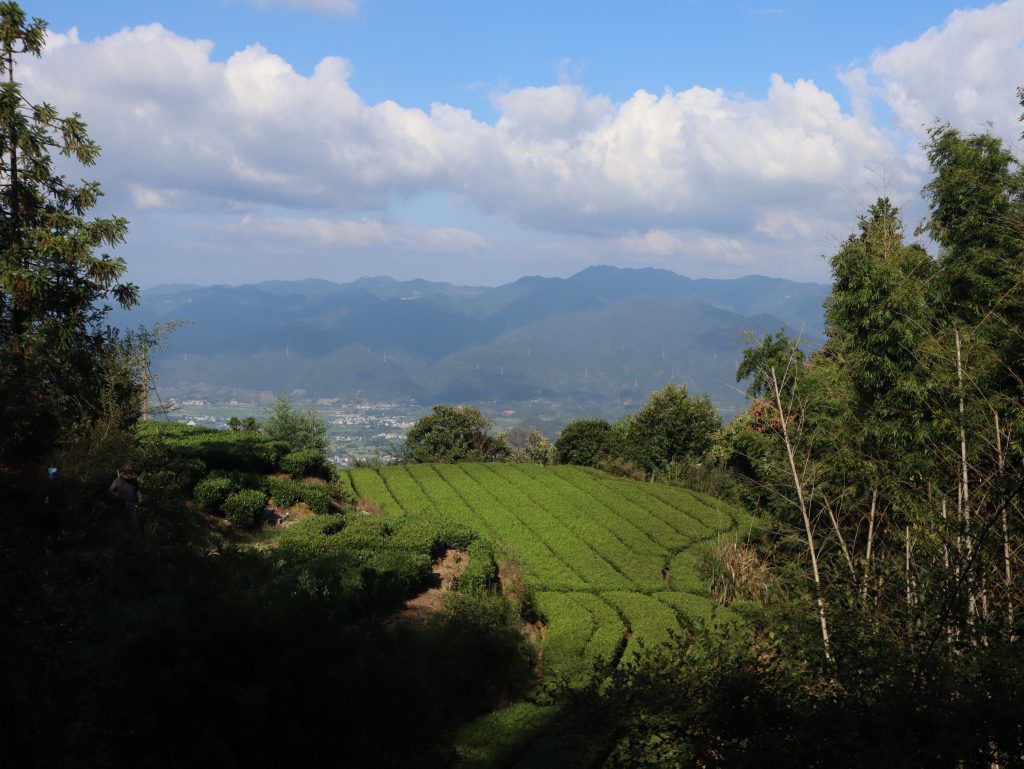
One way to move through Songyang is to follow the lines that have long connected its villages. The oldest of these are the gudao. These ancient trails once formed the primary network across the hills, linking fields to markets, homes to temples, and villages to one another. The gudao follow ridgelines, streams, and forest edges, shaped by repeated use. Villages appear gradually, announced by terraced fields or bamboo groves before buildings come into view.
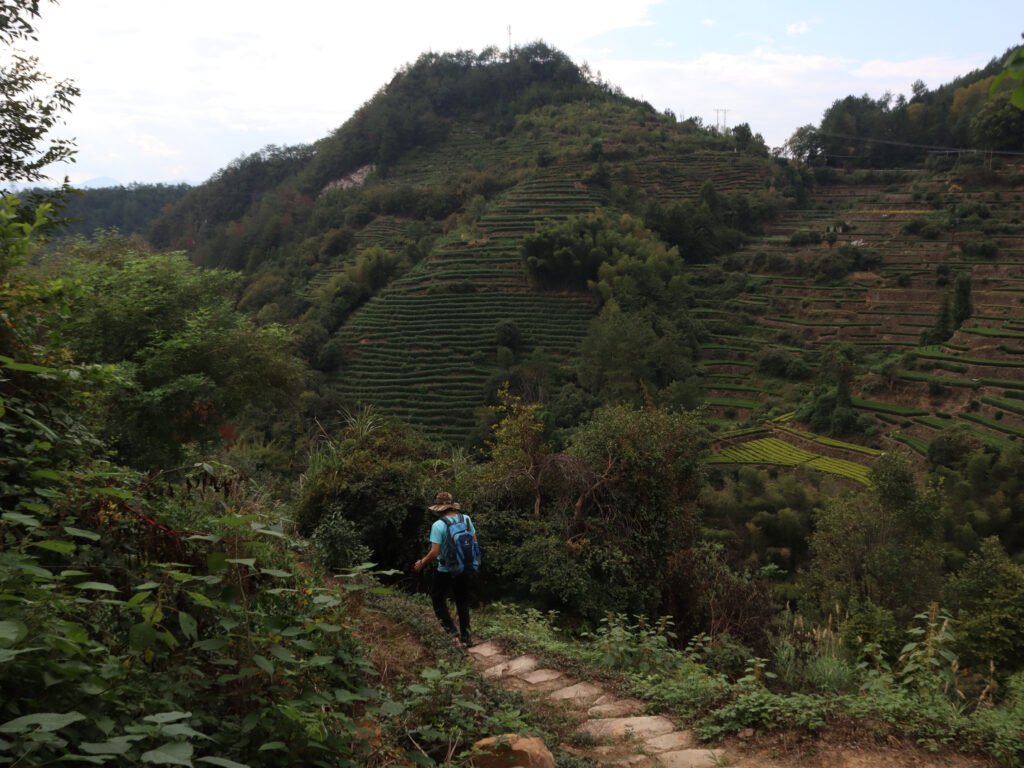
Cycling offers a wider view of the same system. Routes through Damu Mountain Tea Garden pass broad slopes of cultivated tea before continuing toward Songyang Historic Street, crossing the Shimenxu covered bridge that spans the river below and passing beneath the Yanqing Temple Pagoda, which rises above the old route.
Tea as Continuity
Tea has long shaped daily life in Songyang in direct, practical ways. Fields sit close to villages and are reached on foot. Harvest follows established periods in the year, drawing people into the hills when leaves are ready and shifting activity back toward processing and trade once picking ends. Growing, picking, drying, and selling all happen within short distances.
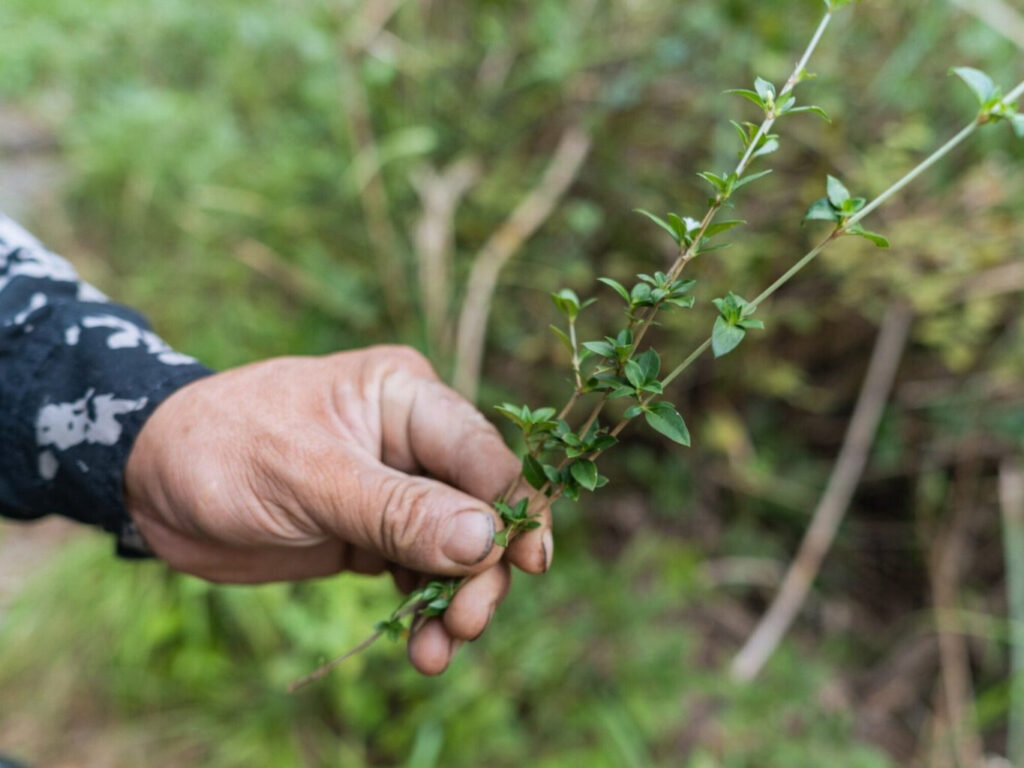
That same seasonal pattern extends beyond tea leaves. Prepared around the Dragon Boat Festival, Duanwu Cha is an herbal infusion made from mountain plants gathered weeks in advance. Walks into the hills to collect herbs are carefully timed, with plants selected, dried, and blended following locally developed methods.
In Songyang Old Town, tea continues as part of everyday life. Traditional teahouses sit alongside newer spaces that approach tea with contemporary presentation. At Yushankong Tea Lounge, local infusions are prepared with the precision of a bar program.
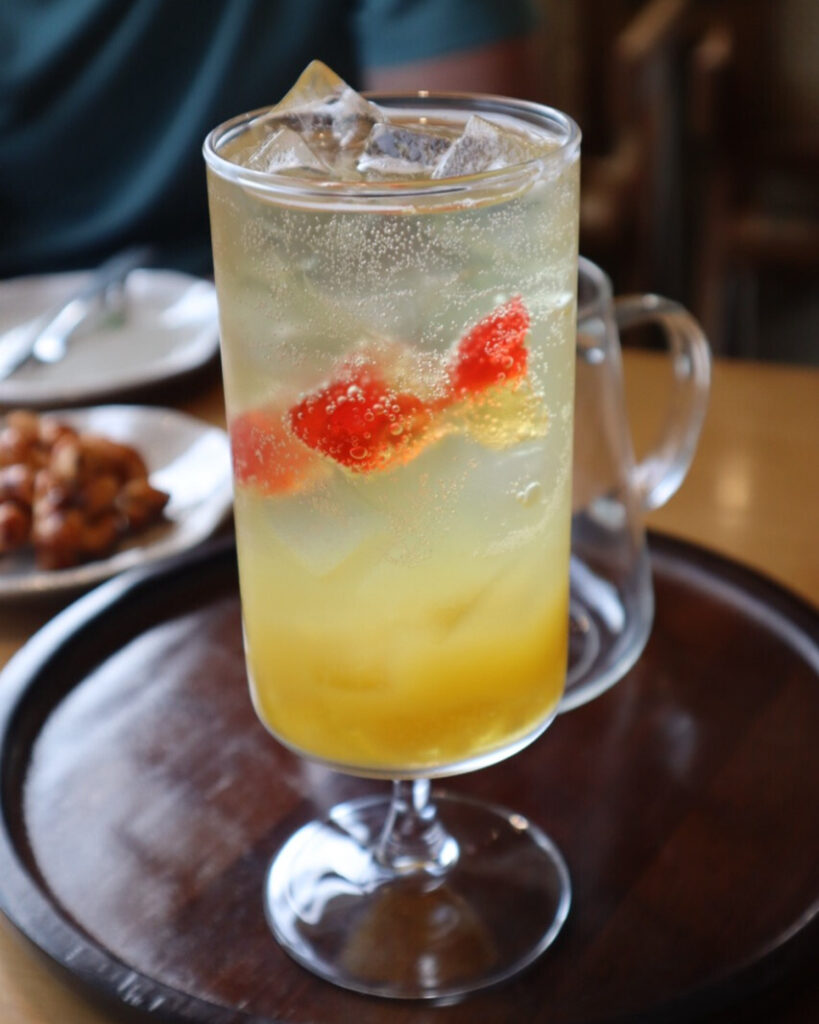
Beyond the town, the tea cycle continues at the Zhejiang South Tea Market, the largest green tea trading market in China, where farmers, brokers, and buyers gather to assess quality, negotiate prices, and move tea onward to other regions.
Craft and Heritage in Use
In Songyang, knowledge is passed on through practice. Along Songyang Old Street, shops and workshops open directly onto the road. Crafts are still made by hand, not as demonstration, but as part of everyday work carried out in plain view.
Palm fiber weaving is one of the crafts that continues in Songyang. Traditionally used to make durable sleeping mats and beds, the material is still worked by hand into functional household objects. In Master Huang’s family, long known locally for palm fiber craftsmanship, fibers are twisted and shaped into palm beds as well as smaller items such as mats, bags, and brushes. The process unfolds through doing rather than explanation, with Master Huang welcoming visitors into his workshop as it takes place.

Incense making also continues as a local specialty in Huangtian Village. Using locally gathered woods and resins, villagers prepare incense through a process that includes shaping and drying the material on site. The finished incense is used in nearby homes and temples.
At certain times of year, this continuity extends into sound and gathering. Gaoqiang opera, a vocal tradition older than Peking Opera, is still performed in villages such as Hengkeng during festivals. Rather than formal productions, performances unfold as part of local calendars, bringing residents together in celebration.
Repurposed Spaces
Change in Songyang tends to take the form of reuse. Former sites of production and community life have been adapted rather than replaced. In Xing Village, a former brown sugar factory has been adapted into a contemporary exhibition and workshop space. Large glass walls keep the sugar-making process visible, allowing traditional techniques to remain part of the building’s ongoing function.
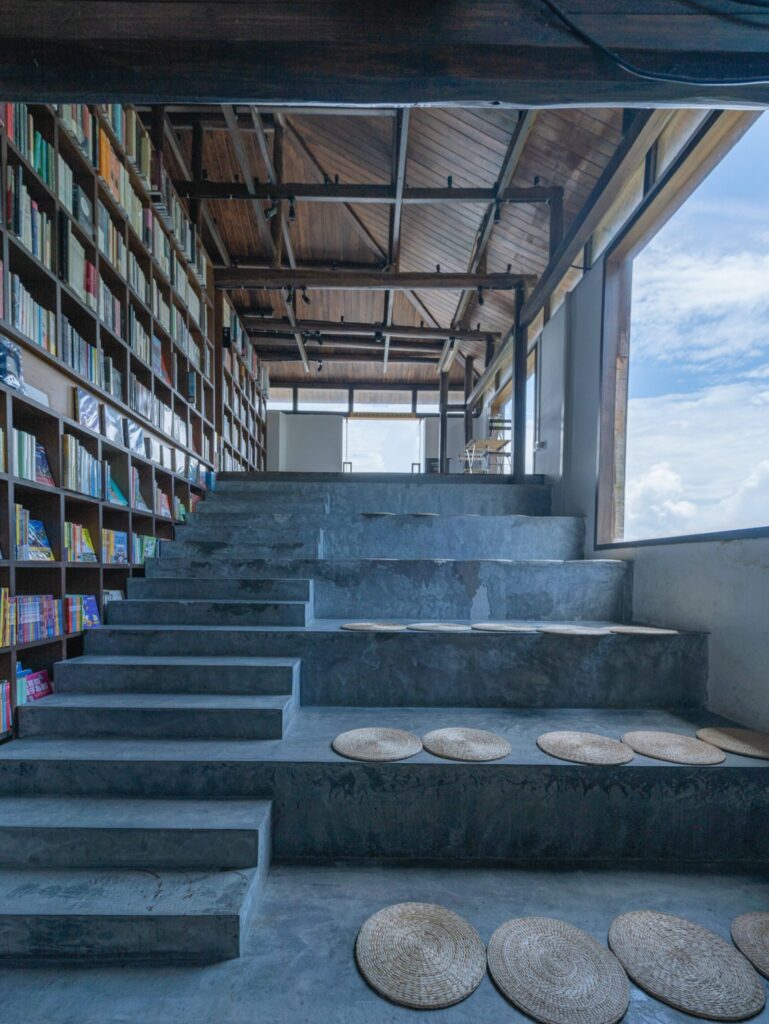
Cultural spaces follow a similar approach. In Chenjiapu Village, a former communal building now houses the Pioneer Bookstore, its shelves focused on poetry, rural studies, and local culture. Large windows frame the valley below, keeping the surrounding landscape visually connected to the interior.
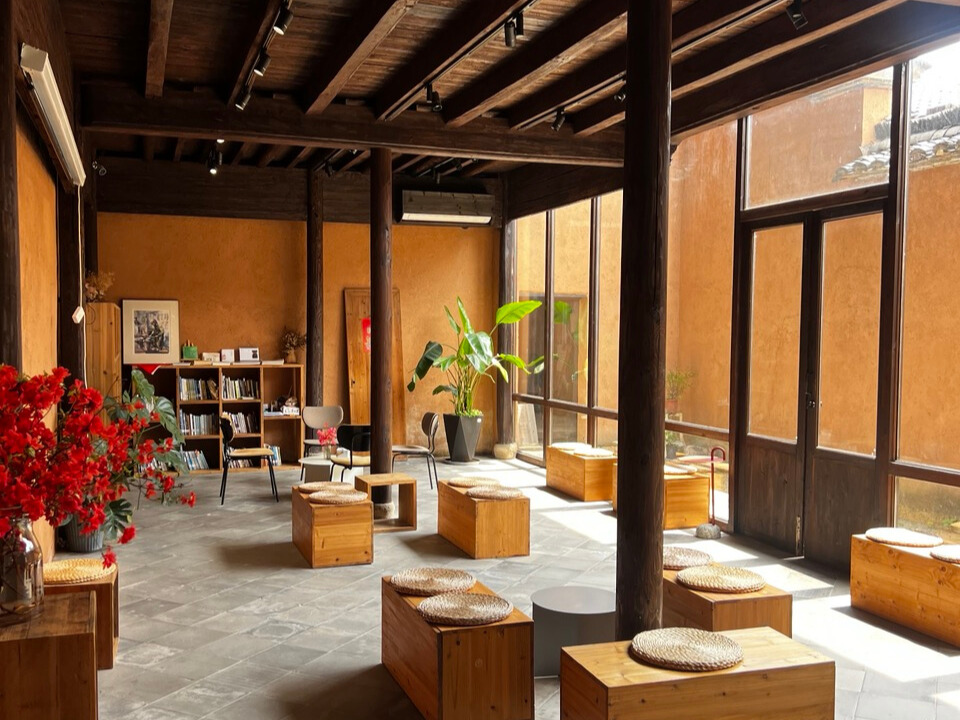
The WildChina Studio, set within a restored folk home in Songyang Old Town, operates as a café, gallery, and gathering space shaped by everyday use. Designed with minimal intervention, the building retains the scale and materials of the original structure while opening to new forms of social life, including film nights, workshops, and gatherings shaped by community interest. Drinks follow the seasons, incorporating locally harvested ingredients and linking the menu to the landscape.
WildChina-Recommended Places to Stay
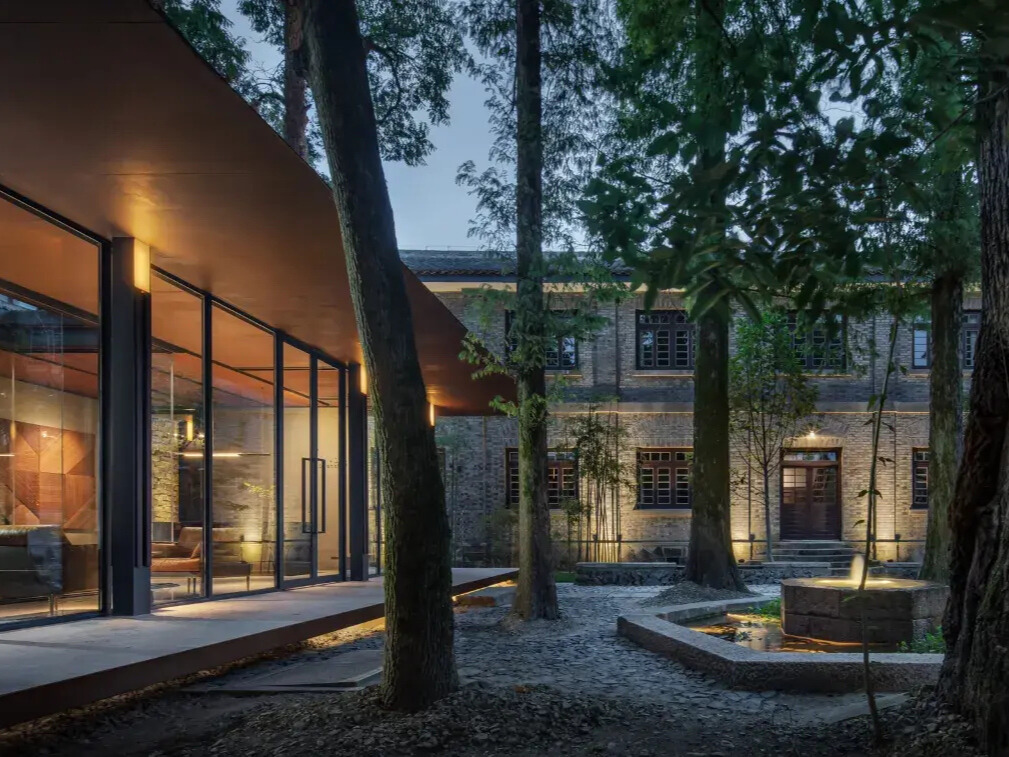
Accommodation in Songyang is rarely separated from its surroundings. Instead, it tends to sit within villages, along paths, or at points where movement naturally slows. Timber frames, earth walls, and tiled roofs are adapted for contemporary use, with rooms opening onto courtyards, lanes, or fields.
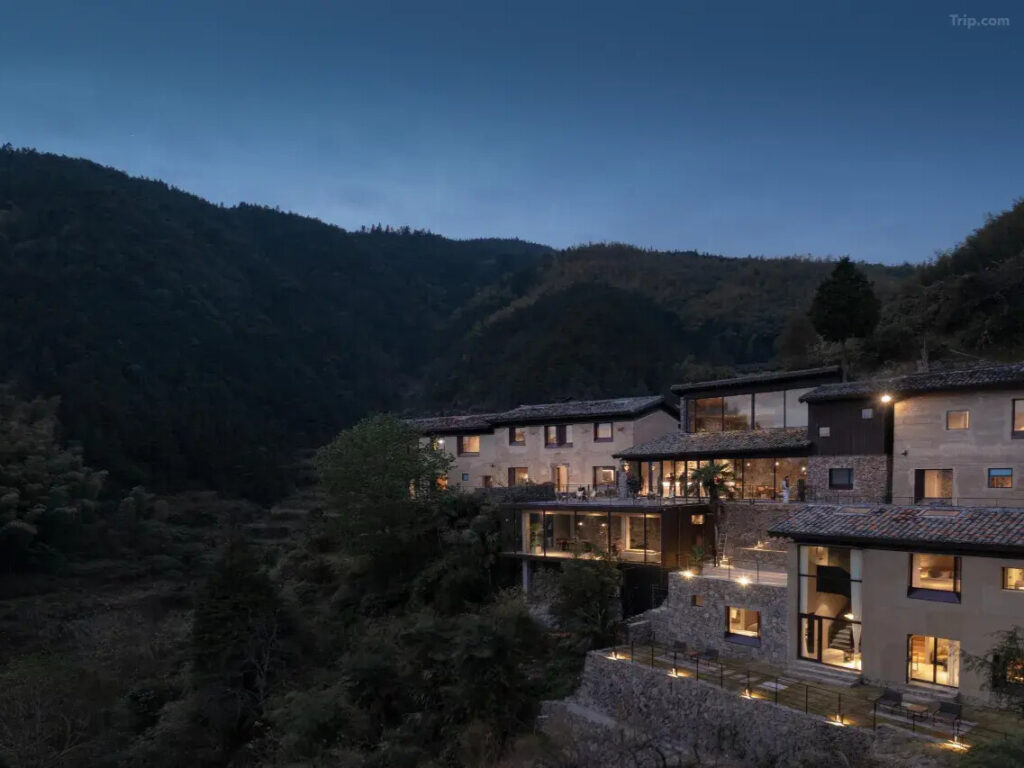
Set within a former Ming Dynasty post station high above the valley in Chenjiapu Village, Stray Birds sits quietly along the mountain ridge. Terraced fields and forested slopes unfold beyond its windows, while village paths below remain part of daily movement. The setting encourages pause without separation. Guests look outward, then step back into village life.
Located among paddy fields in Xikeng Village, on the edge of Songyang’s rural landscape, Yunding Xiankengyuan Boutique is closely tied to its agricultural surroundings. Built with local materials and low-impact design, the property stays connected to seasonal rhythms, with views that shift between planting, harvest, and fallow fields.
On Songyang Old Street, Guandoo Mansion Songyang Wenli integrates accommodation into the historic fabric of town. Renovated civic buildings, courtyards, and working streets sit side by side, placing markets, workshops, and daily activity within walking distance.
Get in touch with our travel designers to plan a journey through Songyang’s ancient hiking routes and everyday landscapes, guided by those who know and live them.
By Gabrielle Keepfer