Food and Drink
 Shopping
 Transportation
 Accommodation
 Useful Tips
 By city
 By Interests
 Pre-departure Guides
 Travel Updates

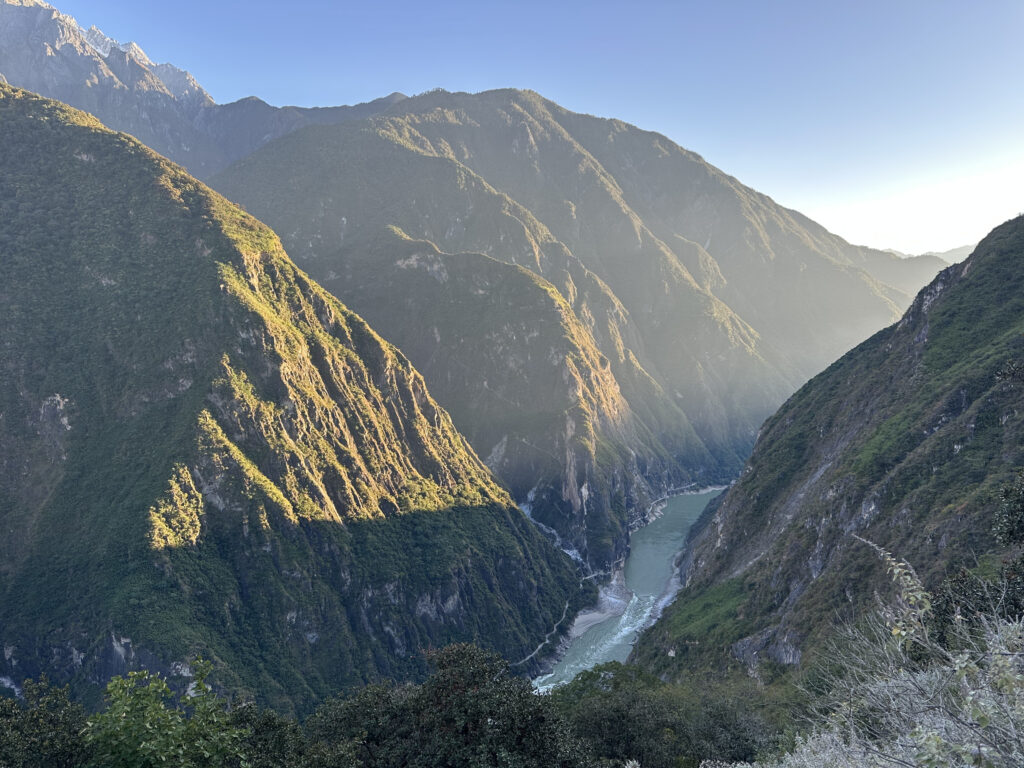
Shangri-La first entered global imagination as an idea through Lost Horizon, which imagined a secluded Himalayan valley set apart by snowbound peaks and geographic isolation. Today, it is a real place: a county in northwestern Yunnan where high plateaus, deep river valleys, and mountain landscapes mirror many of those qualities.

Yet what gives Shangri-La its distinct character lies with the people who live here. Endurance has grown out of life at elevation, and openness from a long history of movement and exchange along the trade and pilgrimage routes that cross Shangri-La’s valleys.
On a recent WildChina journey through the region, this character came into view through the people we met along the way. The individuals below are just a few of the many people who shared their time, work, and daily lives with us.
Sonam: On the Trail
On the high trails outside Shangri-La, Sonam walks at a steady pace, sometimes singing as he goes. Even as the air thins and the path climbs, he is unhurried and relaxed. He grew up in a small Khampa village near Shangri-La, where daily life meant working outdoors and moving on foot between fields, homes, grazing land, and temples. Farming and herding at altitude were central to his childhood. Work was shared, and distance was part of ordinary days. Buddhist observance was part of family life, and one of his brothers later became a monk.
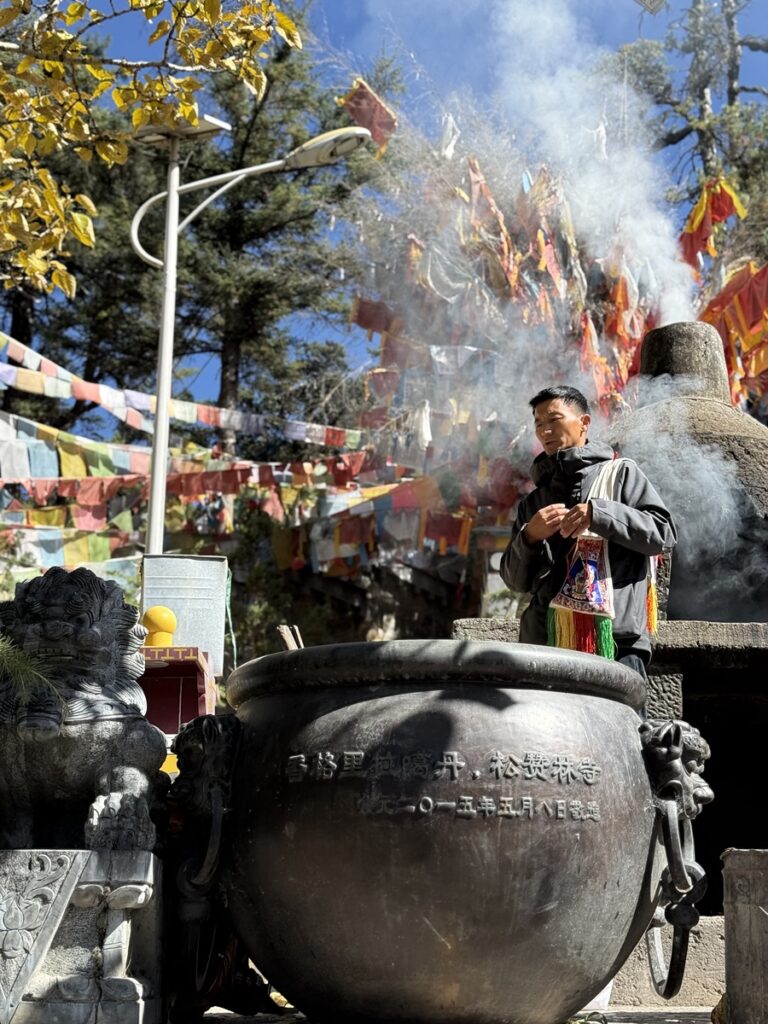
These early experiences continue to inform how Sonam moves through the world. He is most at ease outdoors, especially on the trail. Stories come easily to him and often begin with something familiar, a mountain passed in childhood, a temple visited with family, or a lesson remembered from home. He links what he encounters along the way to Buddhist teachings, explaining ideas clearly and sincerely.
Today, Sonam is a WildChina guide, leading journeys along historic routes such as the Gudao, and meeting questions with stories rather than explanation. Time spent with Sonam reflects his calm and generous nature, developed through years of living, working, and walking in Shangri-La.
Qingqing Jie: At the Farm
Qingqing Jie works outdoors most of the day, moving between her family home and the surrounding fields. She checks crops, manages produce, and prepares food. The stone-and-wood house is arranged around a small courtyard, built for life at altitude.
She lives on a small family farm just outside town, overlooking the lake below. Much of her time is spent tending what the family grows and keeps, including barley, potatoes, carrots, and eggs. The work follows the season and the weather. Honey and other produce are sold from a small shop attached to the home, adding another layer to the work that sustains her household.
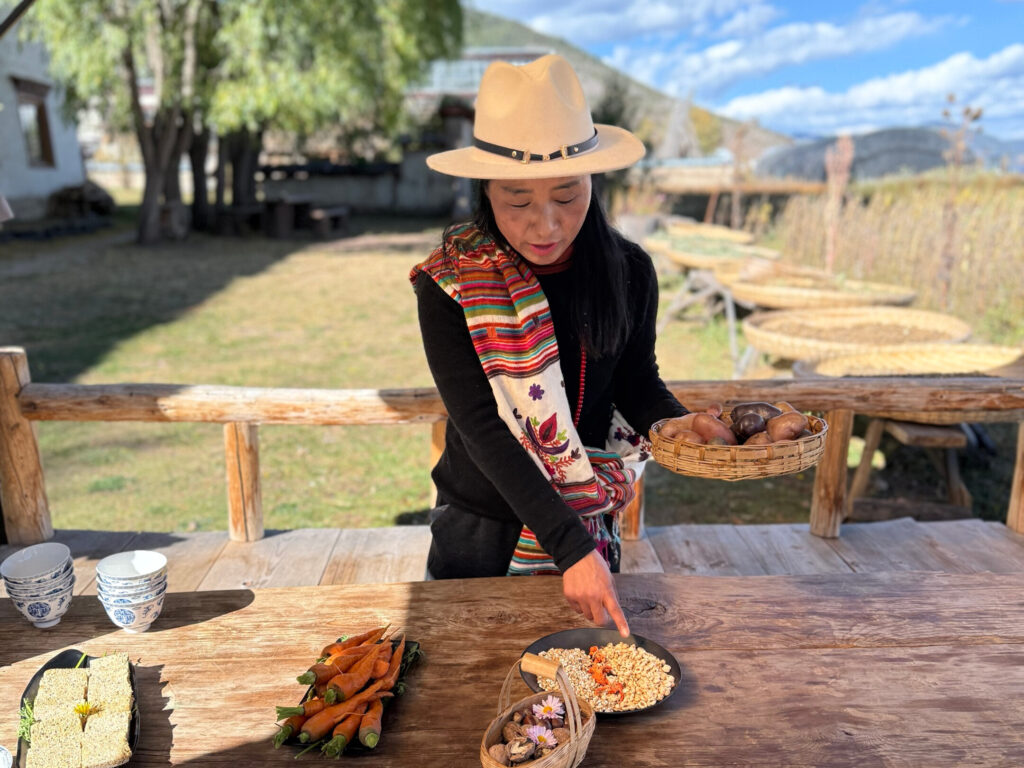
When visitors arrive, a meal is prepared using what has been grown on the land. Everything is laid out carefully, and she offers explanations of where it comes from. Warm yak milk is poured from a flask to drink alongside the food. Her manner is graceful and attentive, shaped by years of responsibility within her family and farm.
Obsang Endup: In the Workshop
Obsang Endup begins most days at home, stepping into the workshop attached to his house to prepare clay and lay out his tools. He has lived and worked in Nixi all his life, part of a small village where black pottery has long been made by only a few families. As a fourth-generation practitioner, the craft has always been present, learned early, and practiced daily.
He works without an electric wheel, shaping each vessel slowly by hand. Paddles and stones, worn smooth through years of use, guide the form as he builds it up and adjusts it. Pots, incense burners, and roof tiles are created with familiar Buddhist motifs such as the endless knot, lotus, and conch shell before being taken outside. He arranges them carefully in a pit near the house, tending the process until smoke darkens the clay to a deep, metallic black.
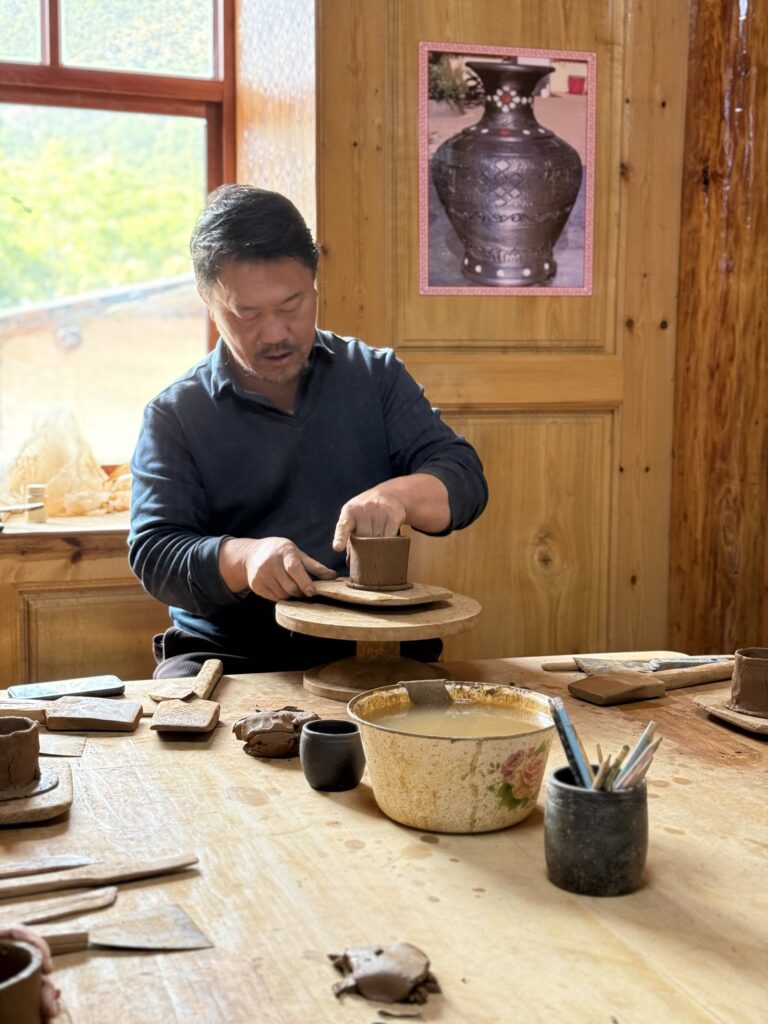
Obsang Endup moves easily between work and conversation, continuing to work the clay as he speaks. When travelers arrive, he invites them into the workshop to try the process themselves, guiding their hands, adjusting form, and offering corrections as the clay takes shape. His work reflects a way of making grounded in patience and repetition, carried forward through years of practice within his family and village.
Across Shangri-La, life continues through ordinary acts carried out with care: walking familiar paths, working the land, and making objects meant for daily use. Sonam, Qingqing Jie, and Obsang Endup make visible this way of living by allowing time to be shared, on the trail, at the farm, and in the workshop.
WildChina journeys are built around this principle of being present with people and place. They allow space for conversation and learning alongside the people who live and work here. Get in touch with our travel designers to start planning your journey.
By Gabrielle Keepfer