Food and Drink
 Shopping
 Transportation
 Accommodation
 Useful Tips
 By Destination
 By Interests
 Pre-departure Guides
 Travel Updates


Most visitors come to Chongqing expecting heat, and the city delivers. Steam curls from woks filled with chili oil and sizzling spices, rising onto the sidewalk; peppercorns and garlic make nostrils flare and eyes water.
Social media highlights the city’s most tongue-tingling dishes, but the real story goes deeper. Our team at WildChina set out to understand food in Chongqing beyond its famous spice, and we found spots easy to miss but hard to forget.

Chongqing’s food tells the story of the city itself. Sitting at the meeting point of the Yangtze and Jialing rivers, it grew into one of southwest China’s busiest trading hubs, attracting merchants, migrants, and new culinary influences from across the region. Later, as China’s wartime capital, it welcomed another wave of arrivals whose traditions became part of local life. Today, that history survives in everything from humble noodle shops to hot pot restaurants in unlikely settings.
Madam Hu’s noodle shop
Near Luzumiao Market, lunch begins when the plastic stools appear. Diners perch on one, balancing their bowls on another, a local practice known as bandeng mian.
Madam Hu opened her noodle and chaoshou (wonton) shop in 1992, long before this part of the city became central Chongqing. Nearly 35 years later, on a typical day, locals drift in and out. Mornings are quieter, while lunch brings a steady stream of regulars. Several staff members have worked here for more than twenty years, having joined as teenagers and stayed ever since. Customers keep returning for bowls of noodles, chaoshou, handmade bingfen (cold jelly dessert), and sweet soy milk.
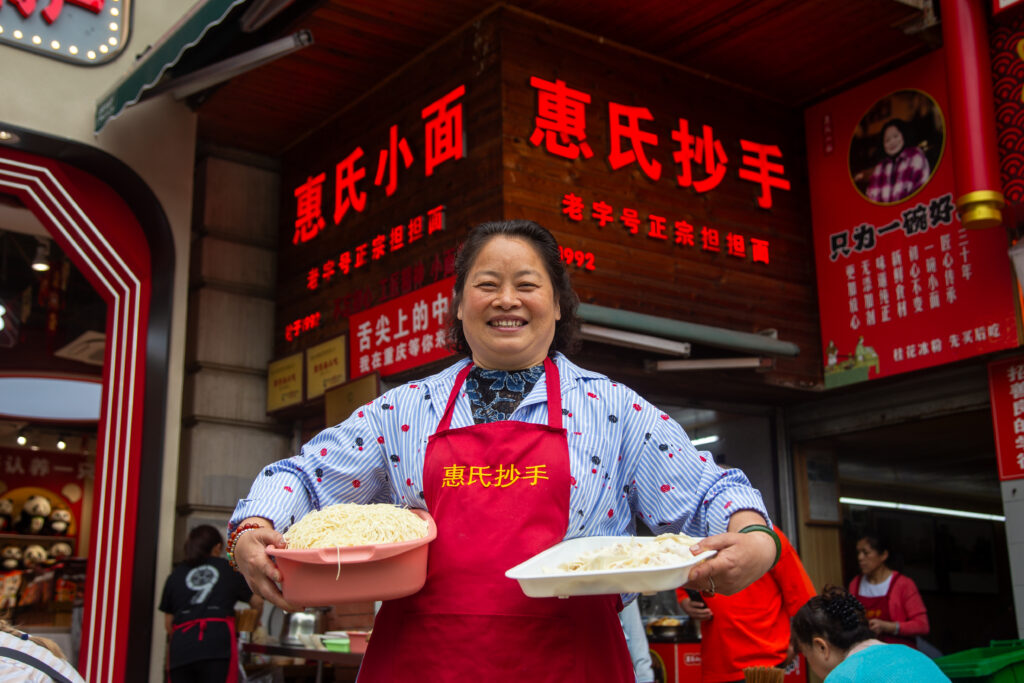
Businessmen have approached Madam Hu over the years about opening franchises across Chongqing, but she has always refused. For her, keeping a single shop is the best way to maintain the quality she is known for. Even celebrity guests have found their way to her storefront; their photos now line the walls.
Most mornings, Madam Hu arrives before the rush to oversee noodle preparation and catch up with her staff. By afternoon, she is usually playing mahjong with friends. Despite her success, she still carries herself like any other local. Around her, old neighborhoods have been redeveloped and new towers have risen, but her daily routine remains much the same.
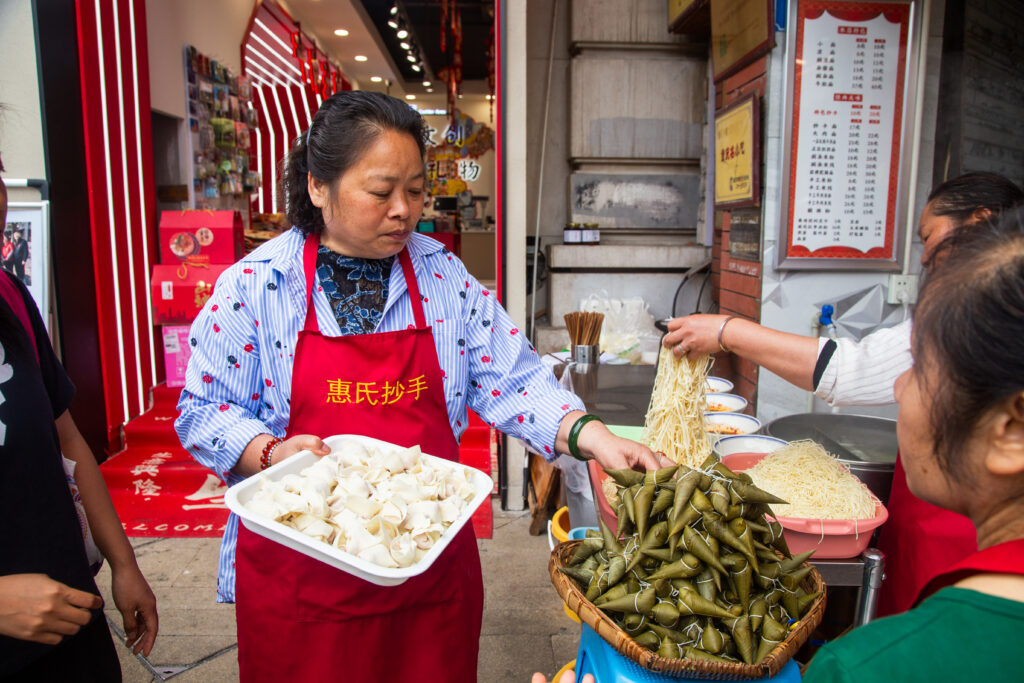
For WildChina travelers, the experience goes beyond sitting down for a bowl. Behind the counter, they can learn about the ingredients and seasonings that give Chongqing noodles their distinctive flavor, watch noodles being prepared, and even try making their own under the guidance of the shop’s noodle masters.
A former bomb shelter hot pot
In a quiet corner of the city, an entrance opens into a tunnel with rough stone walls and a low ceiling. Once an air-raid shelter, it now houses Underground City Old Hot Pot.
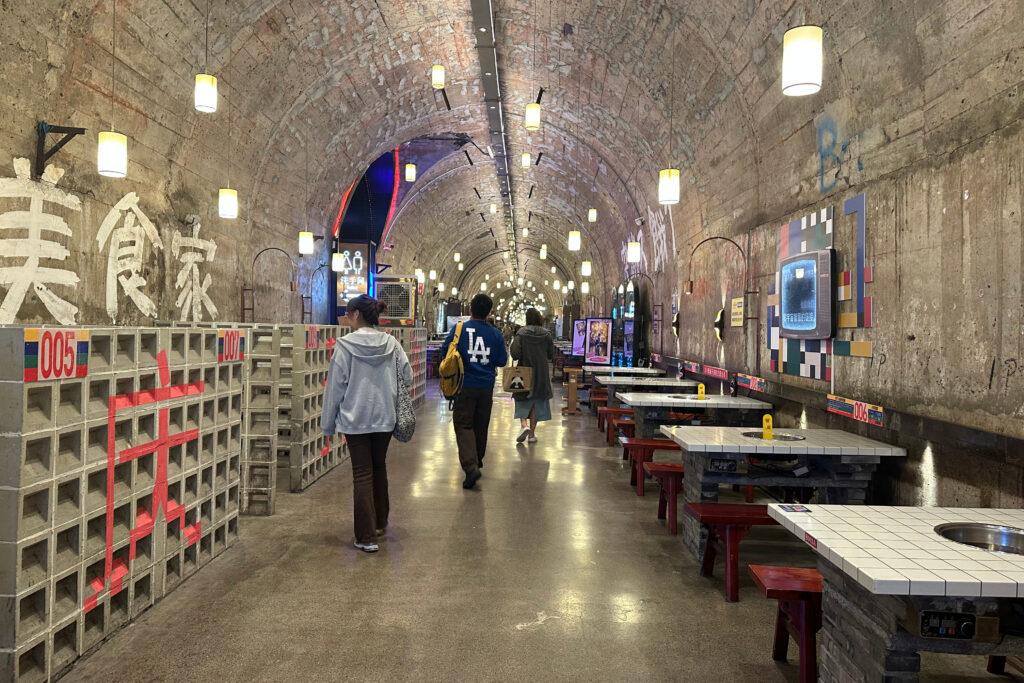
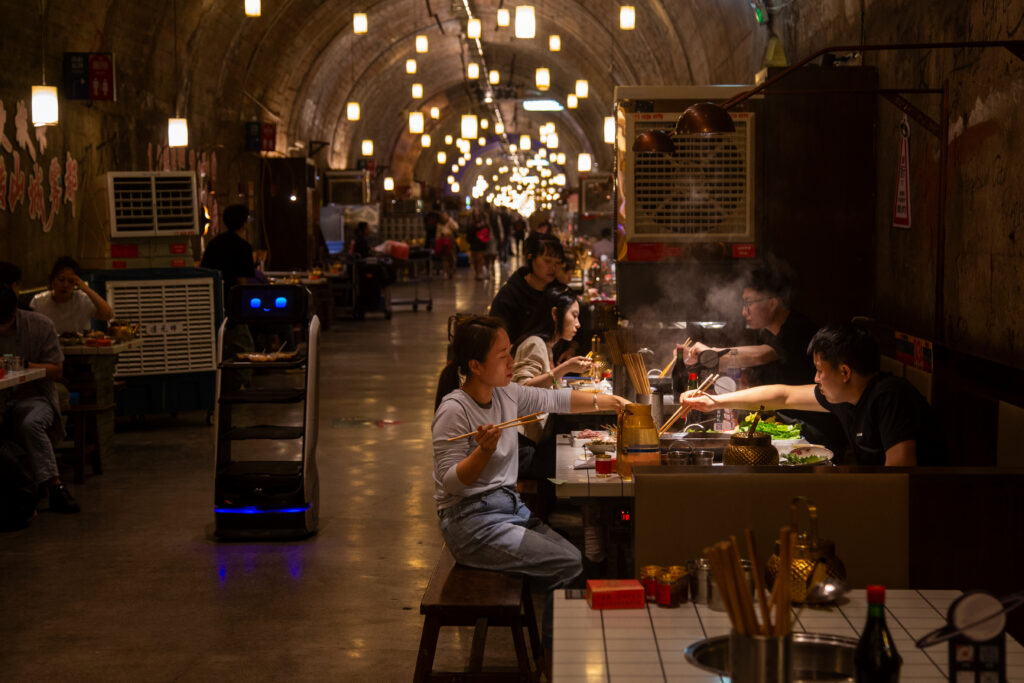
The tunnel stretches farther than it appears from the entrance. What starts as a modest passage gradually unfolds into a vast underground space. Diners gather around tables under dim lights, dipping meat and vegetables into bubbling broths. Staff in military-style uniforms add to the atmosphere, while service robots glide between tables carrying trays of food and drinks. The mix of wartime history and modern technology creates an experience unlike any other.
This spot also connects Chongqing’s food with it’s history. Visitors might begin at the Flying Tigers Museum or the Stilwell Museum, where photographs, flight jackets, and wartime maps recount the U.S.-China alliance. A local guide can lead them through Yuzhong District’s steep alleyways, where residents once hurried between homes and air-raid shelters during bombing raids. During World War II, Chongqing served as China’s wartime capital and endured years of attacks, prompting the construction of thousands of air-raid shelters. Many remain today, repurposed as restaurants, markets, parking garages, and community spaces.
Eat like a local in Chongqing
What to Eat
Chongqing’s food culture thrives on the sidewalks. Unlike Shanghai, where street food has mostly moved indoors, or Beijing, where it is found under hutong roofs, here it cooks openly. Markets, narrow alleys, and riverside streets hum with vendors at all hours, offering bold flavors and local favorites.
Here are some of the foods our team recommends, for all times of the day.
Breakfast
- Xiǎomiàn (小面): Simple noodles dressed in chili oil, garlic, and soy sauce, sometimes topped with minced pork.
- Yóuchá (油茶): A thick, savory breakfast drink made from toasted flour and spices, often topped with crunchy fried dough, peanuts, and sesame seeds.
Afternoon
- Suānlàfěn (酸辣粉): Chewy sweet potato noodles in a tangy, spicy broth.
- Cíbākuài (糍粑块): Fried rice flour triangles, crisp on the outside and soft inside.
- Dòuhuā (豆花): Silky tofu pudding finished with chili, crushed peanuts, and spring onion.
- Bīngfěn (冰粉): A chilled, jelly-like dessert served with brown sugar syrup and toppings such as nuts, fruit, or raisins.
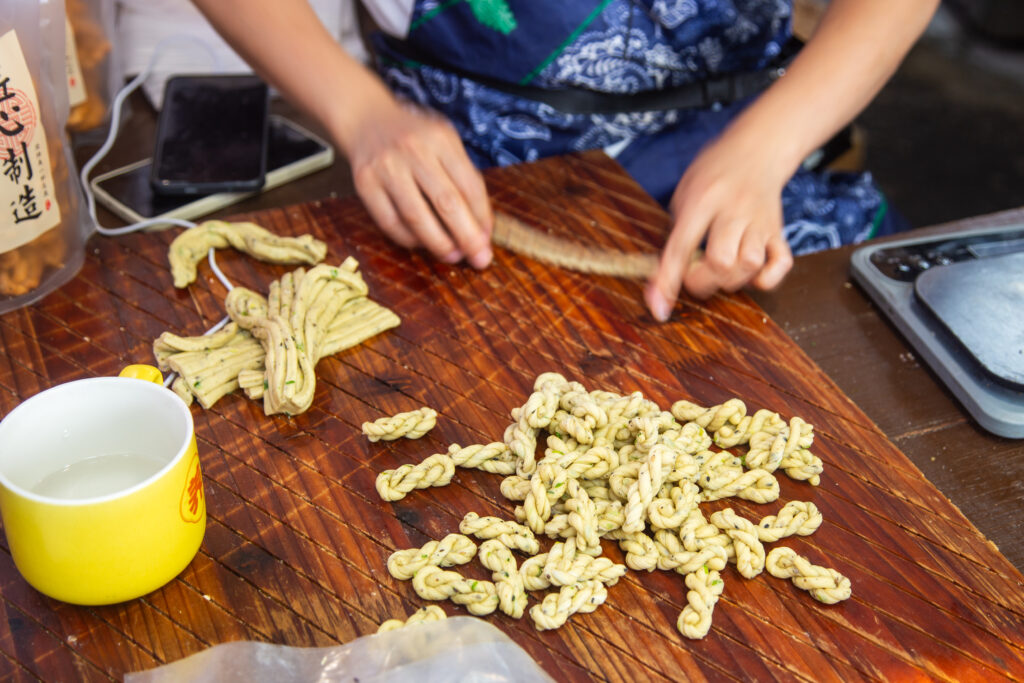
- Máhuā (麻花): Twisted fried dough snacks, crunchy and lightly sweet.
Late Night
- Shāokǎo (烧烤): Skewers of meat, vegetables, and seafood, grilled over open flames.
- Kǎoyú & Xiǎolóngxiā (烤鱼 & 小龙虾): Grilled fish and crayfish, best savored along the riverside.
Where to Eat
- Luzumiao Market: Small noodle shops and local eateries, including Madam Hu’s long-running noodle shop.
- Guanyinqiao Food Street: Crowded in the evenings, with smoky skewers and street snacks around every corner.
- Bayi Road & Jiefangbei Food Street: Traditional dishes side by side with newer eateries.
- Xiahaoli Old Street: A restored hillside neighborhood where cafés, local restaurants, and snack stalls sit among historic buildings and stone stairways.
- Mountain City Alleyway: One of Chongqing’s best-preserved old lanes, with teahouses, small eateries, and views over the Yangtze River.
- Nanbin Road & South Bank: Riverside tables bustling late into the night.
Chongqing’s most memorable meals are often found off the beaten path. Get in touch with our travel designers to experience a deeper taste of the city.
By Gabrielle Keepfer
With thanks to Mari Yang and Linda Wang