Food and Drink
 Shopping
 Transportation
 Accommodation
 Useful Tips
 By Destination
 By Interests
 Pre-departure Guides
 Travel Updates


Luxury fashion in Shanghai is no longer confined to the boutique. From restored mansions to contemporary art libraries, some of the city’s most interesting luxury experiences now take place far beyond the shopping mall.
Here are four places where fashion, culture, and the city intersect in unexpected ways.
The restaurant in a restored mansion, Prada
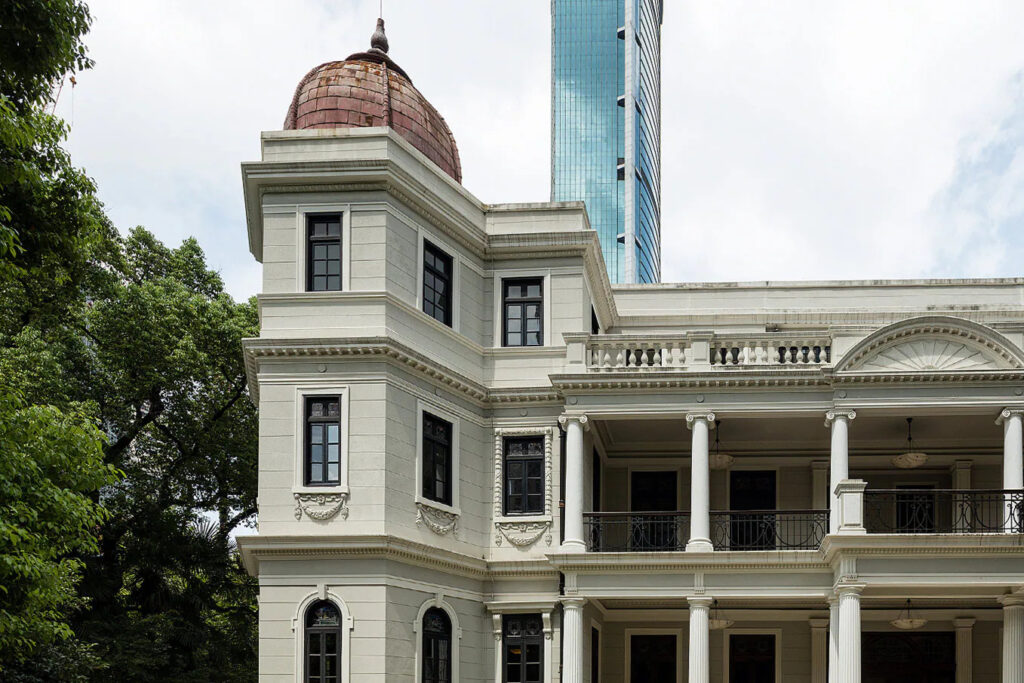
Behind a set of iron gates in Jing’an stands Rong Zhai, a 1918 villa that offers a surprising pocket of calm in the heart of the bustling district. The mansion was built by a German expatriate and later acquired by the influential Rong family, before falling into decades of decline. Prada purchased the property in 2011 and spent six years meticulously restoring it before reopening the mansion as a cultural venue in 2017.
Since March 2025, Rong Zhai has been home to Mi Shang Prada Rong Zhai, a collaboration between the fashion house and director Wong Kar-wai. Inspired by the concept of tête-bêche (head-to-tail) — two stamps joined in opposite orientation — the project creates a dialogue between Shanghai and Milan, Chinese craftsmanship and Italian design, and past and present.
The mansion plays out like a Wong Kar-wai film, each room a distinct scene. Near the entrance, a patisserie displays handmade chocolates, fruit jellies, and confectionery inspired by Italian pastry traditions. Beyond it sits a café centred around a handcrafted cherry-wood bar whose detailing recalls the social salons of 1920s Shanghai. A corridor lined with ceiling lights references Wong Kar-wai’s iconic In the Mood for Love, while the dining room is rendered in the director’s characteristic palette of saturated pinks, yellows, and greens. Outside, the terrace combines Italian bamboo chairs with subtropical planting.
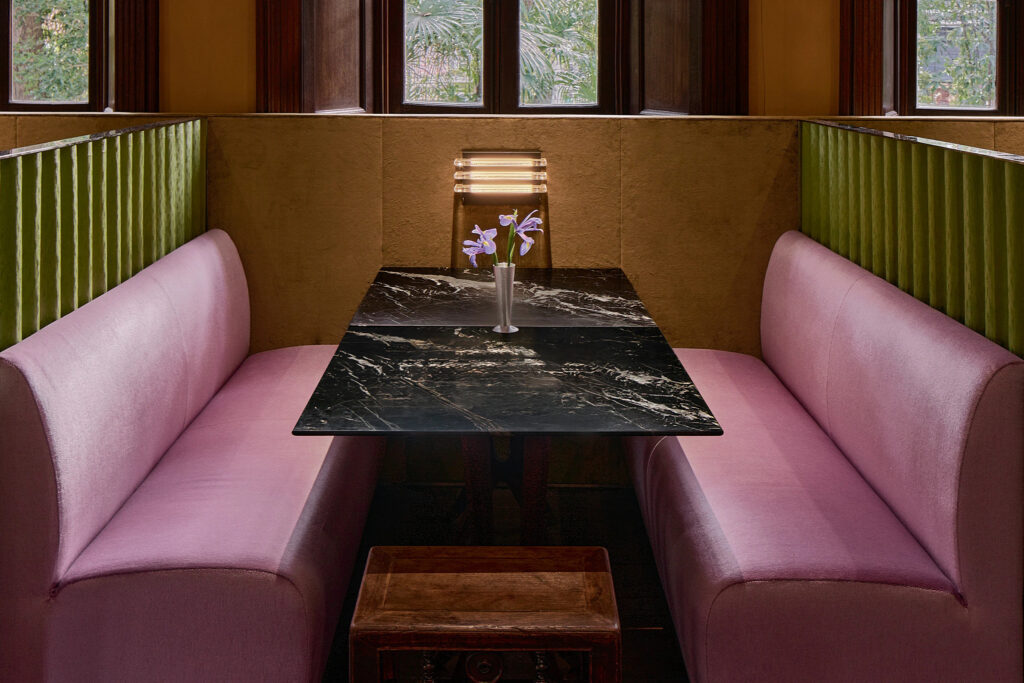
The menu follows the same cross-cultural approach. Contemporary Italian cuisine sits at its core, with seasonal tasting menus, handmade pasta, and ingredient-led dishes shaped by both Italian and Chinese influences. Alongside the dining programme, the cocktail menu translates elements of the mansion into a series of drinks organised around four narrative chapters.
The ship on land, Louis Vuitton
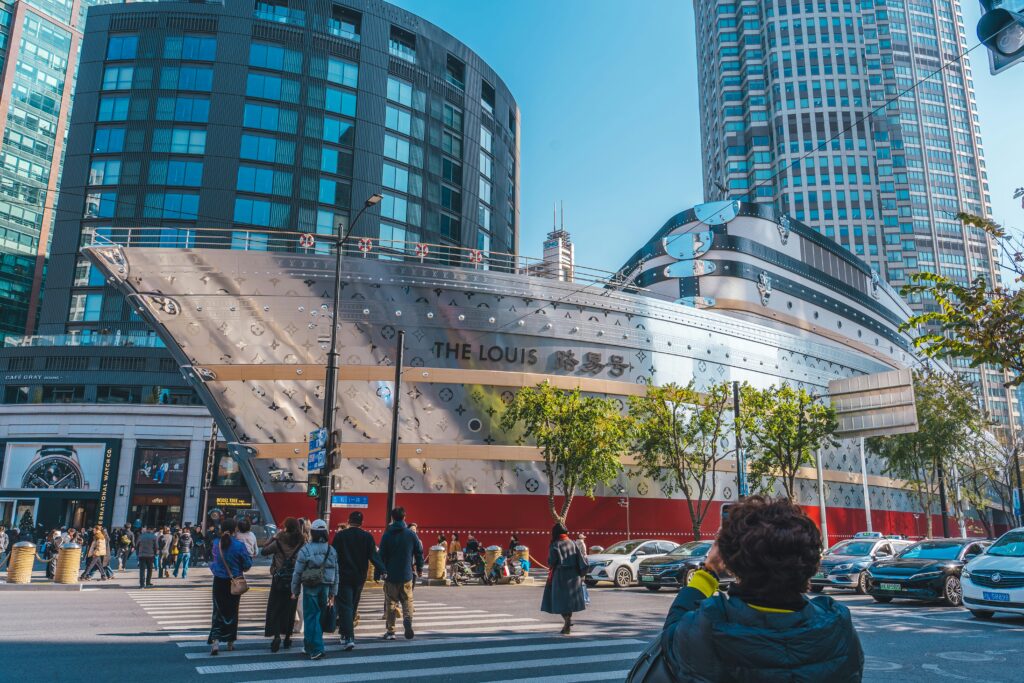
Moored in the plaza outside HKRI Taikoo Hui, Louis Vuitton’s flagship, known as The Louis, opened in June 2025 and has become one of Shanghai’s most recognisable new landmarks. At 30 metres tall and 114 metres long, the structure resembles a ship clad in metallic monogram panels, while its upper levels are stacked to evoke the brand’s iconic travel trunks.
The design draws on two intertwined histories: Louis Vuitton’s legacy forged in the age of ocean travel, and Shanghai’s history as one of Asia’s most important maritime ports.
Visitors begin with Visionary Journeys, an exhibition designed by Shohei Shigematsu of OMA, where the brand’s history unfolds through immersive installations and archival objects. A canopy of suspended trunks forms the striking centrepiece, while galleries trace Louis Vuitton’s long relationship with travel and craftsmanship. Throughout the exhibition, contemporary commissions sit alongside historic pieces, and artisans demonstrate traditional trunk-making techniques that continue to define the house today.
The experience continues upward through the building. A boutique showcases the latest collections within interiors inspired by the romance of travel, while the top-floor Le Café Louis Vuitton offers a more leisurely pause. Here, maritime details and warm wood finishes echo the ship-like architecture below, and the menu brings together French culinary traditions with flavours familiar to Shanghai diners.
The library in a former power station, Chanel
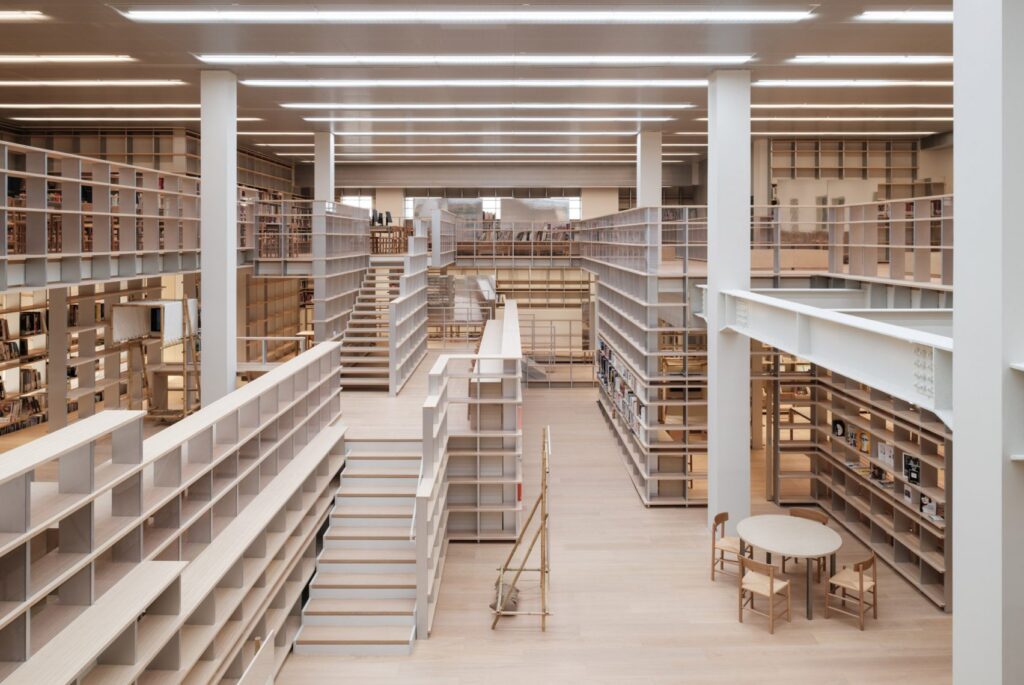
On the third floor of the Power Station of Art, mainland China’s first state-run contemporary art museum, the Espace Gabrielle Chanel feels unlike any conventional library. Designed by Japanese architect Kazunari Sakamoto, the space unfolds across multiple levels of open shelving connected by staircases and walkways, encouraging visitors to discover books through movement.
Opened in November 2025, it is mainland China’s first public library dedicated entirely to contemporary art, with 10,000 accessible volumes spanning architecture, design, and social sciences. The name honours Gabrielle Chanel, who kept Coromandel lacquer screens in her Paris apartment and had a deep interest in Chinese art. Rather than creating a temporary exhibition, Chanel has invested in a permanent public institution developed in partnership with the museum. The library also houses the Archive of Chinese Contemporary Art and hosts regular talks, workshops, and other public events.
The atelier in an art gallery, Chanel
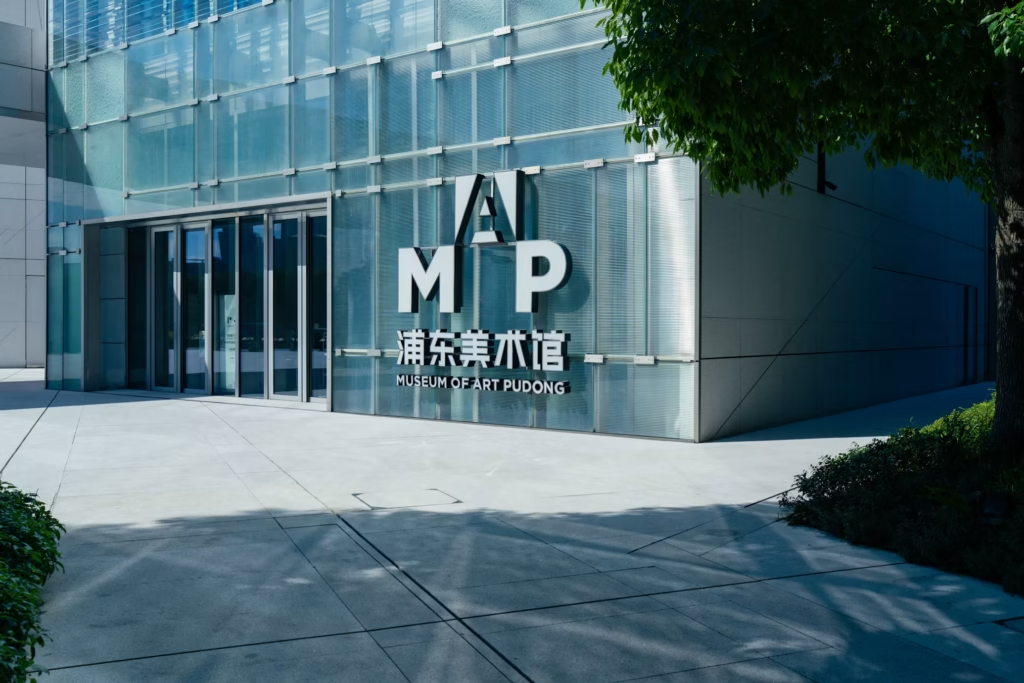
Chanel’s Le19M craft atelier, dedicated to preserving and promoting the specialized artistry behind haute couture, is bringing its travelling gallery to the Museum of Art Pudong. Running from September 25 to November 15, 2026, A Galerie du 19M Shanghai focuses not on finished garments, but on the skills that make them possible.
Visitors move through spaces dedicated to embroidery, millinery, featherwork, and pleating, with artisans demonstrating techniques that are rarely visible outside the atelier. In the embroidery room, beads and sequins are applied individually by hand, revealing the labor behind garments that may require hundreds of hours of work. Elsewhere, hats take shape from wooden blocks and lengths of silk, continuing traditions passed through generations of craftspeople. Talks and masterclasses run alongside the displays, creating opportunities for visitors to engage more deeply with the techniques on show.
Shanghai also regularly hosts dynamic pop-up exhibitions, such as the recent Miu Miu “Tales & Tellers” installation at the historic Shanghai Exhibition Center. For travelers interested in exploring this side of the city, our travel designers can incorporate these experiences into a tailor-made Shanghai itinerary alongside private tours, dining reservations, and expert-led introductions to Shanghai’s creative and cultural scene.
By Gabrielle Keepfer