Food and Drink
 Shopping
 Transportation
 Accommodation
 Useful Tips
 By Destination
 By Interests
 Pre-departure Guides
 Travel Updates


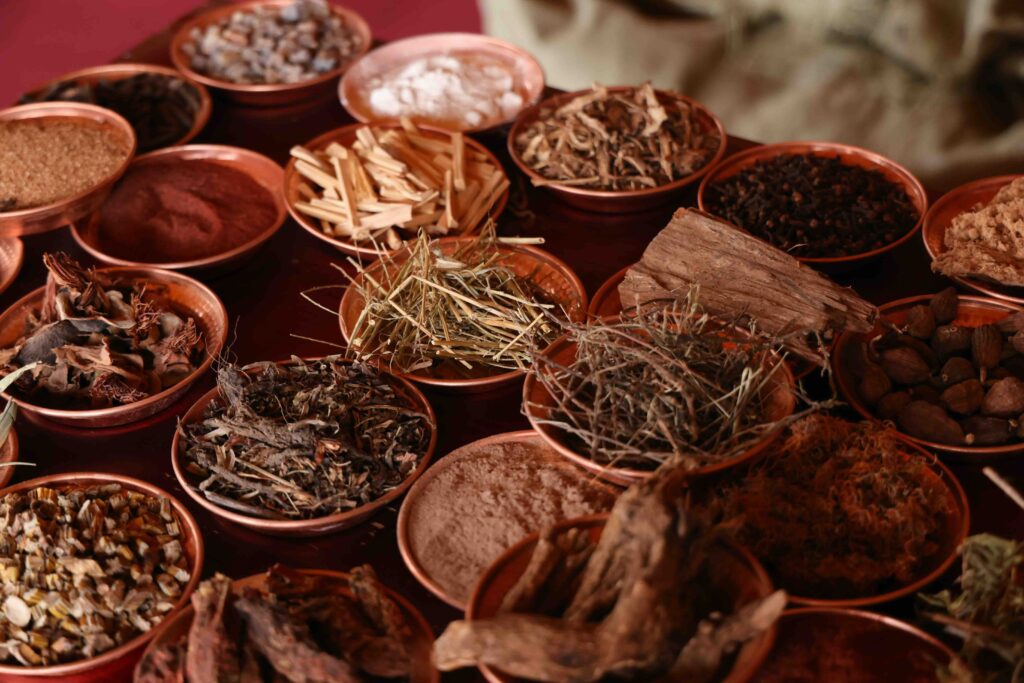
In Sangpu Village, south of Lhasa, the scent of ground cypress fills a workshop, its woody, resinous notes mingling with those of Tibetan medicinal ingredients. On a red wooden table, copper-colored dishes hold rough pieces of bark, pale slivers of wood, tangled dried stems, and powders ranging from sandy brown to deep red. Here, local villagers make incense by hand.
Behind the workshop is Khenpo Genga, a Buddhist scholar who earned his Geshe degree at just 27, making him one of Tibet’s youngest holders of the qualification. Often compared to an advanced doctorate in Tibetan Buddhist studies, the degree requires years of intensive study and debate. Genga passed the rigorous monastic examinations at Lhasa’s Jokhang Temple before traveling to Beijing for further study.
Despite opportunities to pursue a career in Beijing, he chose to return to Sangpu to help revive the monastery, extending his work to the community around it. Drawing on a craft passed down through generations, he established a small incense workshop where local villagers, including people with disabilities and families facing financial difficulties, could learn the skills and earn a living close to home.
A place of Buddhist learning
A five-minute walk from the workshop stands Sangpu Monastery, once one of Tibet’s most important centers of Buddhist learning and home to more than 10,000 monks. Regarded as one of the birthplaces of Tibetan Buddhist philosophy, it brought scholars together to study, debate, and exchange ideas.
While many Tibetan monasteries are closely associated with a particular Buddhist school, Sangpu historically welcomed different traditions without placing one above another. This approach earned it the name “Nalanda of the Snow Land,” a reference to the great ancient Buddhist university in India.
Incense in Tibetan Buddhist life
Incense has long been burned as an offering in Tibetan Buddhist worship. Its preparation also draws on centuries of Tibetan medical knowledge, with recipes combining aromatic woods and medicinal ingredients.
Tibetan incense-making techniques were added to China’s national intangible cultural heritage list in 2008. Recipes and methods vary between places and producers. Traditional ingredients can include cypress, sandalwood, saffron, snow lotus, musk, and cloves, with their selection and proportions determining the finished scent.
At Sangpu, the incense is entirely handmade and additive-free. Its fragrance comes from its raw ingredients, reflecting the craft’s connection to both spiritual practice and Tibetan medical traditions.
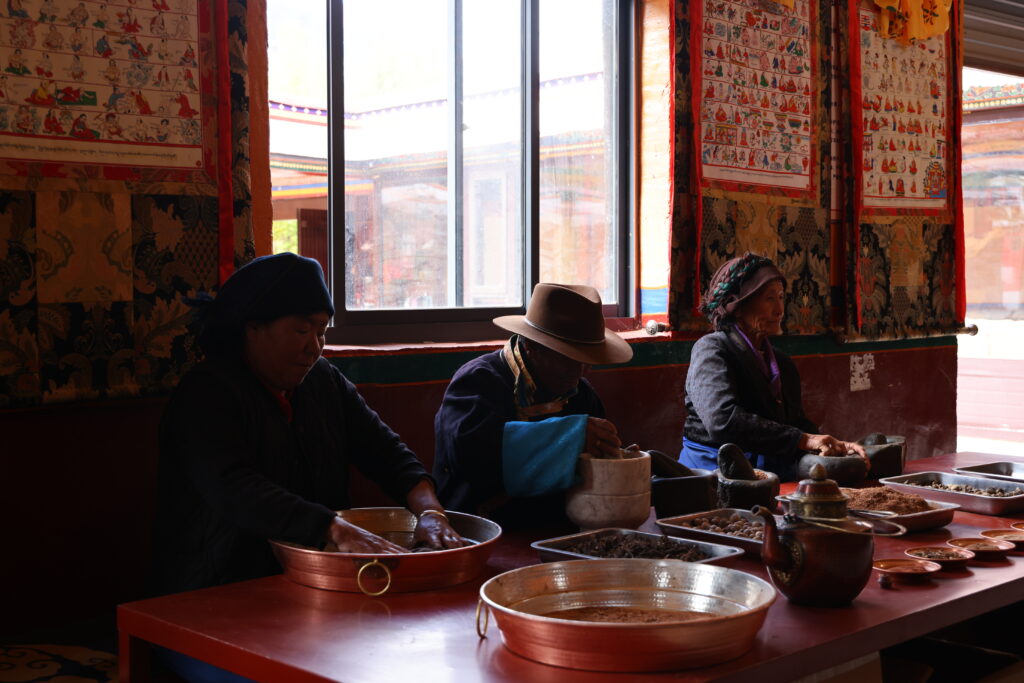
Inside Sangpu’s workshop
The process begins with grinding cypress, then combining it with medicinal ingredients. Makers knead the mixture into a damp, pliable paste before extruding it or shaping it by hand into sticks and small, pointed forms. These are arranged on wooden boards and trays to dry. Each piece is formed from the incense paste itself, without a wooden core.
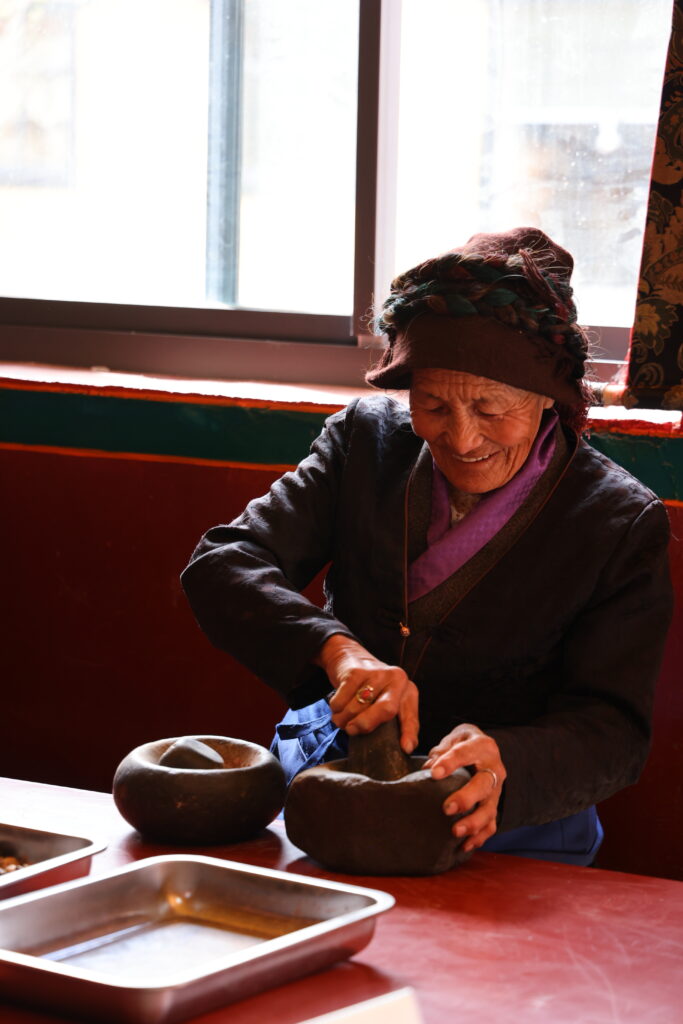
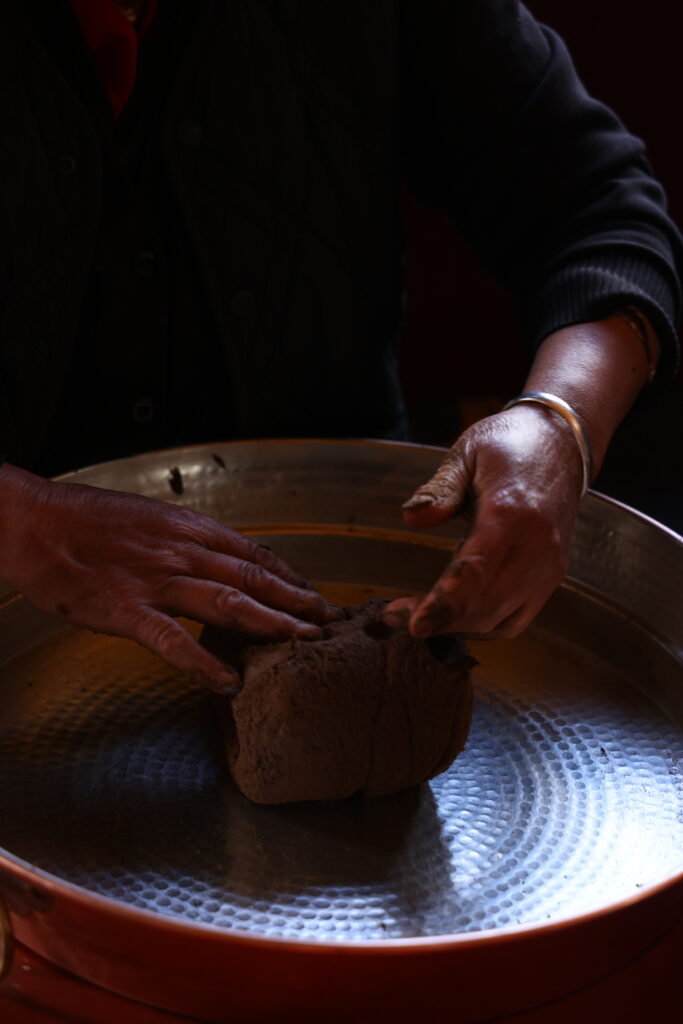
Genga has taught villagers each stage of the process directly at the workshop. The enterprise now sells its products under the name Sangpu Tibetan Incense, or 桑普藏香.
Visiting Sangpu
With WildChina, guests can visit Sangpu Monastery and the nearby incense workshop as part of a journey through Tibet. We usually begin at the monastery, exploring its place in Tibetan Buddhist learning before making the five-minute walk to the workshop.
Here, guests are introduced to the ingredients laid out in dishes, with time to examine their textures and smell the woods, dried plants, and powders used in the incense. A guide helps with questions about the materials and techniques, while local makers continue their work nearby.
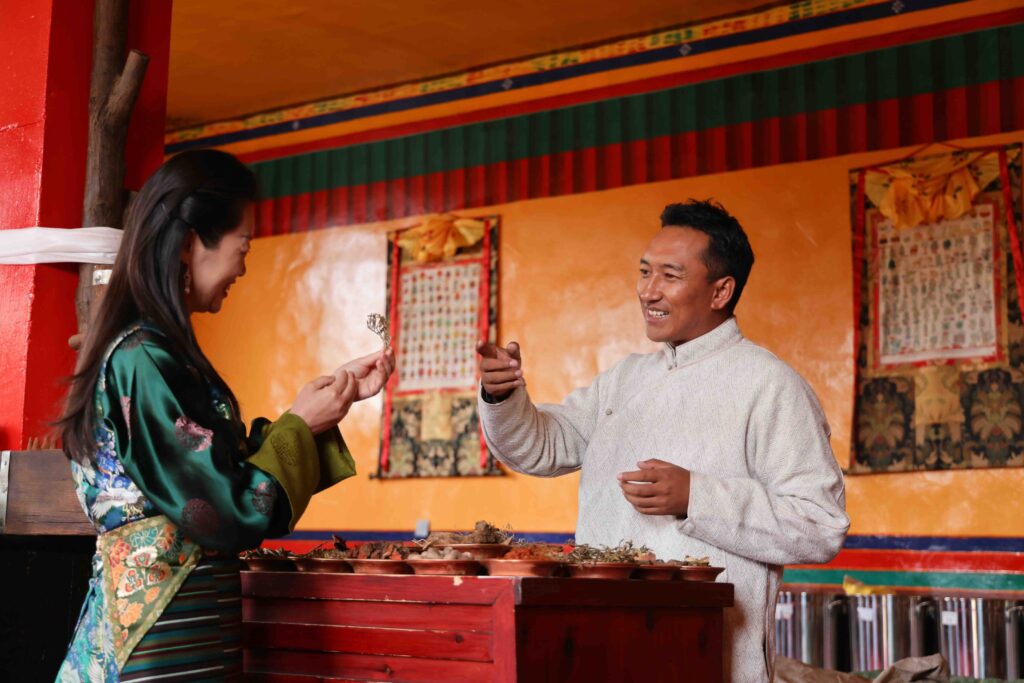
Guests can then try working with prepared incense paste, molding small triangles or forming sticks by hand. Together, the monastery visit and workshop experience connect Sangpu’s history of Buddhist scholarship with Genga’s work in the village today.
To include Sangpu Monastery and a hands-on incense-making experience in your Tibet journey, get in touch with our travel designers.