Food and Drink
 Shopping
 Transportation
 Accommodation
 Useful Tips
 By Destination
 By Interests
 Pre-departure Guides
 Travel Updates


No single book can explain China, just as no single story can represent it. A fuller picture comes from many voices, including those looking back across generations and those navigating life in a changing country.
For travelers, reading adds context to everyday encounters. A hutong is not simply an old alleyway but a neighborhood where generations have made their homes. A bowl of noodles carries knowledge passed between cooks, while a parcel arriving at a Beijing doorstep forms one small part of a courier’s working day.
We asked WildChina founder Mei Zhang and members of our team for their China book recommendations. Their selections span memoir, narrative history, fiction, and academic writing.
Whether planning a first visit to China or returning with new questions, these are books worth taking along.
Personal stories within a changing country
Country Driving: A Chinese Road Trip by Peter Hessler (2010)
Team Pick
Peter Hessler travels across China as private car ownership begins to change how people live and move. His journeys lead from stretches of the Great Wall to a rural village and the factory towns of Zhejiang. Observant, funny, and grounded in conversation, the book introduces the people living through rapid economic change and a shifting relationship between countryside and city.
Factory Girls: From Village to a City in a Changing China by Leslie T. Chang (2008)
Team Pick
Leslie T. Chang follows two young women who leave their rural homes to work in the factories of Dongguan. Through their jobs, friendships, and ambitions, the book gives a personal account of the migration behind China’s manufacturing boom. It offers valuable context for the Pearl River Delta and the workers who helped build its economy.
The Good Women of China: Hidden Voices by Xinran (2002)
Team Pick
Based on stories shared with Xinran during her work as a radio presenter, this collection brings together the experiences of women living through periods of profound change. Their accounts explore how wider events entered family life and influenced personal choices. The book adds an important human perspective to China’s recent history.
Ancestral Leaves: A Family Journey Through Chinese History by Joseph W. Esherick (2011)
Mei’s Pick
Joseph W. Esherick follows several generations of his wife’s family from the late Qing dynasty through the upheavals of the twentieth century. Drawing on letters and archival research, he shows how historical events influenced the decisions and relationships of one family. It is a rewarding choice for readers interested in how national change was experienced at home.
Midnight in Peking by Paul French (2012)
Team Pick · WildChina Expert
Set in Beijing in 1937, Midnight in Peking investigates the murder of Pamela Werner, a young British woman whose body was discovered near the city’s former Fox Tower. Paul French draws on archival research and witness accounts to reconstruct the case against the tense backdrop of a city facing occupation. Moving with the pace of a detective story, the book brings Republican-era Beijing, from its diplomatic quarter to its hutongs and nightlife, into sharp focus.
For WildChina travelers, the story can continue on the streets where it unfolded through our Midnight in Peking Walking Tour. The route visits Beijing locations connected to the case, drawing on Paul French’s research to add context along the way. His newest book, The Last Emperor of China: Twilight of the Forbidden City, explores Puyi and Wanrong’s final years inside the Forbidden City. His other books include City of Devils, set in wartime Shanghai, and Her Lotus Year, which follows Wallis Simpson’s time in China.
Understanding life in China today
I Deliver Parcels in Beijing by Hu Anyan (2025)
Mei’s Pick · Team Pick
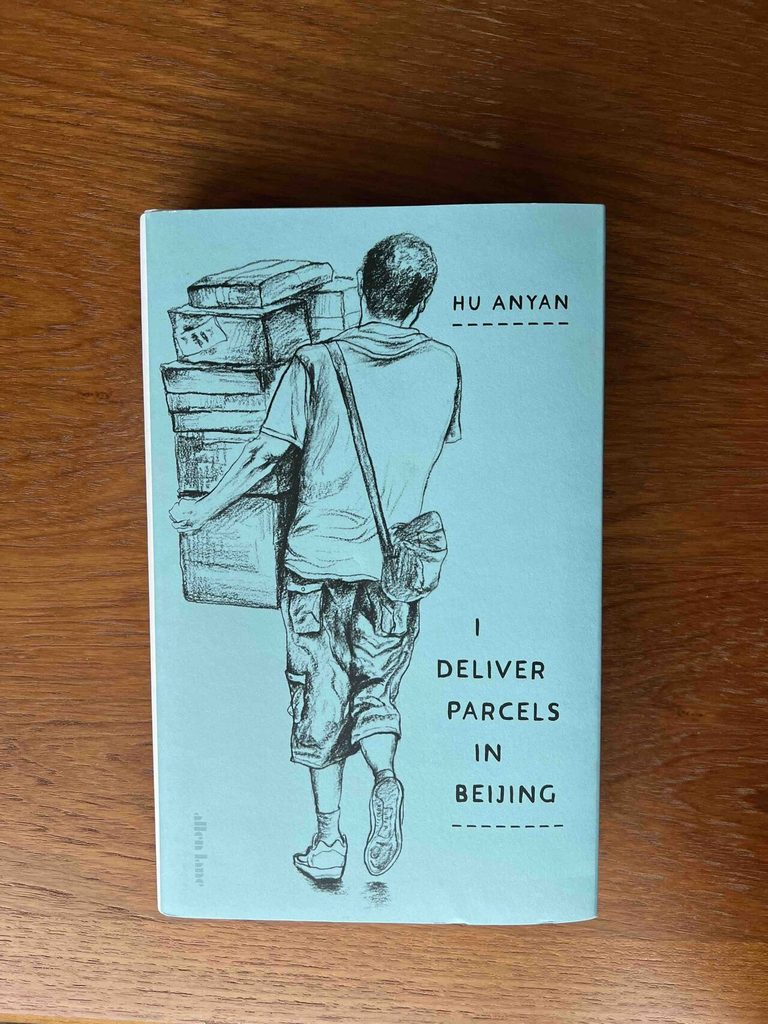
Hu Anyan writes with directness and dry humor about working as a courier and moving through a succession of low-paid jobs. His memoir captures the physical demands and uncertainty of working life in China’s cities without losing sight of personal dignity or small acts of kindness. It offers a rare view of the people behind the speed and convenience of urban life.
The book also resonated with WildChina’s Kendra Tombolato, who shared her thoughts after reading it at the start of 2026.
The Rise and Fall of the EAST by Yasheng Huang (2023)
Mei’s Pick
Economist Yasheng Huang uses the acronym EAST, which stands for exams, autocracy, stability, and technology, to examine patterns running through Chinese history. He considers how long-established institutions have contributed to China’s strengths while also placing limits on innovation. More analytical than the other books on this list, it provides a useful framework for thinking about education, government, and economic development in contemporary China.
The Last Days of Old Beijing by Michael Meyer (2008)
Team Pick
Michael Meyer documents life in a Beijing hutong as old homes and lanes are cleared for redevelopment. Rather than focusing on architecture alone, he records the routines and relationships that give the neighborhood its character. The book offers valuable context for walking through Beijing’s older districts and considering what can be lost as a city changes.
Invitation to a Banquet: The Story of Chinese Food by Fuchsia Dunlop (2023)
Team Pick · WildChina Expert
Food offers one of the most immediate routes into China’s regional cultures. In Invitation to a Banquet, Fuchsia Dunlop explores the ingredients, techniques, and ideas that have influenced Chinese cooking. Her writing helps explain why a meal in Chengdu differs from one in Hangzhou and how food connects people with memory, community, and place.
Fuchsia is a WildChina expert and has spent decades studying and writing about Chinese cuisine. Readers can continue with her memoir Shark’s Fin and Sichuan Pepper, the practical cookbook Every Grain of Rice, or her regional studies The Food of Sichuan and Land of Fish and Rice.
Reading Yunnan: China’s southwestern crossroads
Yunnan, where WildChina founder Mei Zhang grew up, offers a clear example of how China’s regional histories connect with those of surrounding regions. Mountain ranges, river systems, and old trade routes have long linked its communities with those in Tibet, Sichuan, and Southeast Asia. These books explore those connections through food, fiction, and regional history.
Travels Through Dali With a Leg of Ham by Mei Zhang (2016)
Team Pick
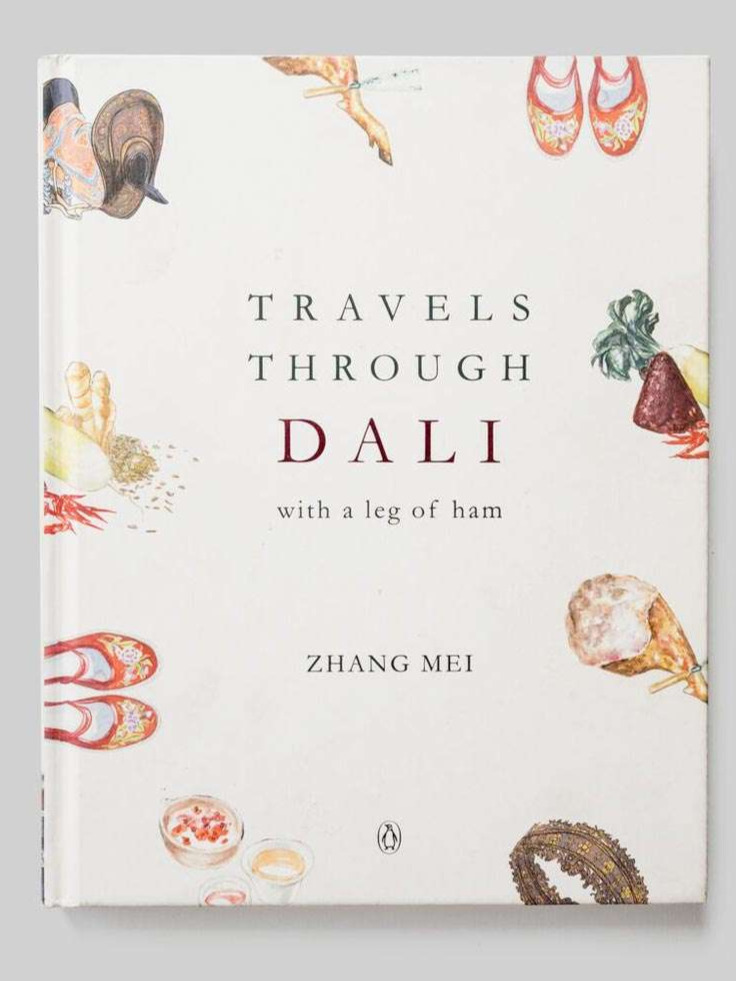
WildChina founder Mei Zhang returns to her childhood home in Dali through its people and food. Part cookbook, part travel narrative, and part family story, the book follows regional ingredients from cured ham to plants gathered in the countryside. Mei’s encounters offer a personal introduction to local knowledge, hospitality, and everyday life in Yunnan.
The Tea Girl of Hummingbird Lane by Lisa See (2017)
Team Pick
Lisa See’s novel follows Li-yan, a young woman from an Akha tea-growing community in Yunnan. The Akha live across southern China and parts of Southeast Asia and are officially classified in China as part of the Hani ethnic group. Li-yan’s story connects family tradition and adoption with the international market for Pu’er tea. For travelers heading into southern Yunnan, the novel raises thoughtful questions about cultural inheritance and the effects of economic change.
The Range of the River: A Riverine History of Empire Across China, India, and Southeast Asia by Iftekhar Iqbal (2025)
Mei’s Pick
Iftekhar Iqbal explores the histories of river systems that flow from the Tibetan Plateau through China, India, and Southeast Asia. He considers how these waterways have supported movement and exchange among communities across the region. Written for an academic audience, the book provides broader context for understanding Yunnan’s connections with surrounding areas.
Between Winds and Clouds: The Making of Yunnan, Second Century BCE to Twentieth Century CE by Bin Yang (2009)
Mei’s Pick
Bin Yang traces Yunnan’s history across two millennia of migration, trade and political change. He presents the province as a meeting point shaped by connections across present-day southwest China, the Tibetan Plateau and Southeast Asia. This is the most academic selection, but it provides valuable depth for anyone seeking to understand Yunnan’s history and its place within China and the wider region.
No reading list can provide a complete account of China. These books offer points of entry and leave travelers with questions to carry into their journey.
The reading can continue after the flight home. A conversation with a WildChina local guide may give new meaning to an earlier chapter, while a dish can make a family story feel more tangible. A landscape in Yunnan may also look different when understood as part of a history of movement and exchange.
Start with the subject closest to your interests, then let one book lead to another. China will still resist a neat conclusion, and that is precisely why it remains so compelling to read, and to explore.
For more recommendations, explore WildChina’s full Reading and Watching List. To make books part of the journey itself, discover some of our favorite bookstores in China.
By Gabrielle Keepfer