GUDAO (Yunnan Ancient Trail): Hiking the Missionary Trail Across Biluo Snow Mountain

Send Us An Enquiry
Send Us An Enquiry
  • This field is for validation purposes and should be left unchanged.
Save To Wish List

Adding item to wishlist requires an account

11762

Have questions?

Don't hesitate to reach out. Our travel designers will be happy to guide you!

China:
+86 10 6465 6602

USA:
+1 888 902 8808 (Toll Free)

Email:
[email protected]


Follow us on WeChat!

If you use WeChat, scan this QR code to follow our official account, WildChina_Journeys. On WeChat, you’ll have China-travel inspiration at your fingertips and we have travel designers on call 24/7 to answer your questions.

9 Days
Availability: September - mid November
Baoshan
Shangri-La
About this Journey

In the southeastern Tibetan Plateau, the Lancang (Mekong), Jinsha (Yangtze), and Nu (Salween) Rivers — three of Asia’s most powerful waterways — flow side by side, carving their path through some of the world’s most dramatic landscapes. Above them rise the sacred peaks of Meili, Baima, and Biluo Snow Mountains, standing as silent witnesses to centuries of history, culture, and diverse local traditions.

Twenty-five years ago, WildChina began its journey in this remarkable region, exploring the rugged folds of the earth. This legacy continues, offering an opportunity to immerse in the breathtaking beauty and rich cultural tapestry of Yunnan’s Three Parallel Rivers region — a UNESCO World Heritage site, where nature and humanity converge in unforgettable ways.
What we love
  • Retracing the footsteps of the Missionary Trail, exploring ancient temples and churches that tell stories of faith, history, and cultural fusion
  • Witnessing the awe-inspiring beauty of the Three Parallel Rivers and Biluo Snow Mountain, standing in reverence before nature’s grandeur
  • Stepping into the homes of Tibetan families, sharing songs, dances, and hearty meals in the warmth of local culture and traditions
Itinerary

Day 1Arrival in Baoshan

Gateway to the Nujiang Valley

Arrive in Baoshan, a historic trading crossroads at the edge of the Gaoligong Mountains. For centuries, routes through this corner of Yunnan connected China with Myanmar and India. Today, the city offers a gateway to the Nujiang Valley and the remote mountain communities beyond. Settle in before the journey turns north toward the Missionary Trail.

Day 2Baoshan to Dimaluo

Through the Nujiang Valley

Follow the Nujiang (Salween) River north through deep valleys and traditional mountain villages. Stop at Tiger Jump Shoal, where the river thunders between massive boulders, before continuing to Laomudeng. Here, visit the village church, share a traditional Nu-style hand-grab rice lunch, and enjoy a Dabia dance performance.

Continue to Dimaluo, a Tibetan village with a strong Catholic heritage dating to the arrival of French missionaries. Explore the village and experience the region’s blend of religious traditions and local cultures. A Tibetan hotpot dinner, accompanied by traditional song and dance, offers a warm welcome to the highlands. At nearby Cungni Village Catholic Church, attend a Mass conducted in Tibetan alongside the local congregation.

Day 3Dimaluo (1,800m) to Daladang (3,300m)

Into the Biluo Mountains | 8km Hike, 6 Hours

Begin the trek into Biluo Snow Mountain, climbing through pine forests, walnut groves, and mountain pastures overlooking the Nujiang Valley. Along the trail, pass rural homesteads and Baihanluo Village, home to a Catholic church built by French missionaries in the late 19th century. Rebuilt after its destruction in 1905, the church combines European and Chinese architectural influences, reflecting the region’s remarkable religious history.

After ascending approximately 1,500 meters, reach Daladang for the first night of camping amid the mountains.

Day 4Daladang (3,300m) to Shambhala Gong (4,000m) to Sewalongba (3,200m)

Crossing Shambhala Gong Pass | 7km Hike, 6 Hours

Continue along the mountain trails through alpine meadows, open pastures, and towering fir forests. The ascent leads to Shambhala Gong Pass at 4,000 meters, where sweeping views reveal the rugged landscape of Biluo Snow Mountain. From the pass, descend through highland scenery toward Sewalongba, at 3,200 meters.

Spend the night camping beneath the mountain peaks.

Day 5Sewalongba (3,200m) to Sila Laka (4,300m) to Diwa Zhacha (3,400m)

Over Sila Laka Pass | 10km Hike, 8 Hours

Take on the most demanding stretch of the trek, crossing remote alpine valleys and vast high-altitude meadows dotted with isolated mountain cabins. The trail climbs to Sila Laka Pass at 4,300 meters, the highest point of the journey, with expansive views across the surrounding peaks.

Descend to Diwa Zhacha at 3,400 meters for the final night of mountain camping.

Day 6Diwa Zhacha (3,400m) to Cizhong (1,900m)

From Mountain Trails to Missionary Heritage | 10km Hike, 5 Hours

Descend approximately 1,500 meters through the mountains to Cizhong, a Tibetan village known for its Catholic heritage and missionary winemaking traditions. Visit Cizhong Church, originally established by French missionaries in the 19th century and later rebuilt with a distinctive Chinese-style pavilion crowning its European bell tower. Inside, traces of the church’s turbulent history remain, while Catholic hymns sung in Tibetan reflect the continuing faith of the local community.

Celebrate the completion of the mountain trek with a Tibetan family-style dinner paired with local Rose Honey red wine, a legacy of the French missionaries who introduced winemaking to the valley.

Day 7Cizhong to Shangri-la

Along the Jinsha River to Shangri-La

Travel toward Shangri-La through the dramatic mountain landscapes of northwestern Yunnan. Pass through the Tibetan village of Benzilan and stop at the Great Bend of the Jinsha River, where the water traces a sweeping curve between steep mountains.

Continue to Dongzhulin Temple, an important Tibetan Buddhist monastery with a longstanding tradition of religious study and prayer. Explore the monastery before arriving in Shangri-La, once a trading center along the ancient Tea Horse Road and today a vibrant center of Tibetan culture in Yunnan.

Day 8Shangri-la

Tibetan Traditions and Village Life

Take a short mountain walk to Dabao Temple for a traditional incense offering, a blessing from a local Tibetan host, and the hanging of colorful prayer flags bearing wishes for peace and good fortune.

Visit a local Tibetan family farm outside Shangri-La to discover daily life in the highlands, from tending crops to preparing homegrown produce. Later, wander through the winding lanes of Dukezong Old Town, a historic stop along the Tea Horse Road, where prayer flags, traditional buildings, and local markets reflect centuries of Tibetan heritage.

Day 9Departure from Shangri-la

Farewell to Yunnan

Transfer to Shangri-La Airport, with assistance from the WildChina guide for departure and check-in, bringing the journey across Biluo Snow Mountain to a close.

Hotels
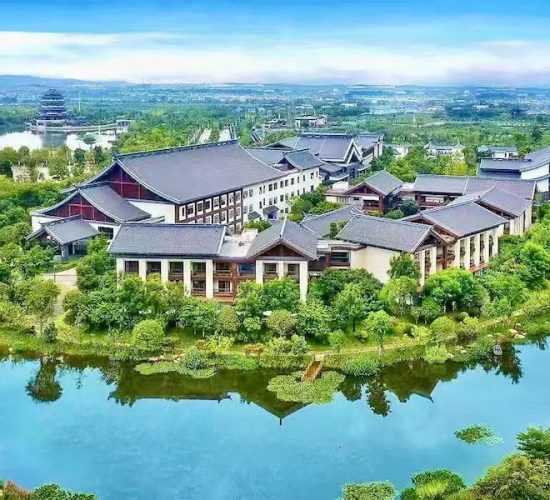
Qing Hua Hai Guan Fang Garden Hotel beside Qinghua Lake in Baoshan

Qing Hua Hai Guan Fang Garden Hotel

Local Boutique

Set beside Qinghua Lake in Baoshan, Qing Hua Hai Guan Fang Garden Hotel combines landscaped gardens with hot spring facilities for a relaxing stay.
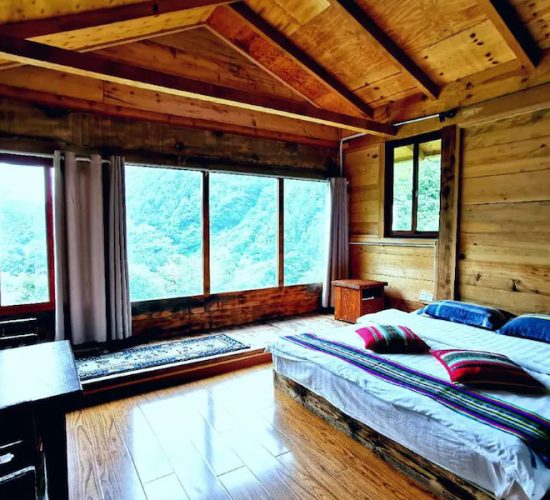
A timber-lined guest room with mountain views at Gongshan Aluo Inn

Gongshan Aluo Inn

Local Guesthouse

Aluo Inn perfectly resonates with the essential beauty of the mountain landscape outside, affording leafy views of foliage and canyon.
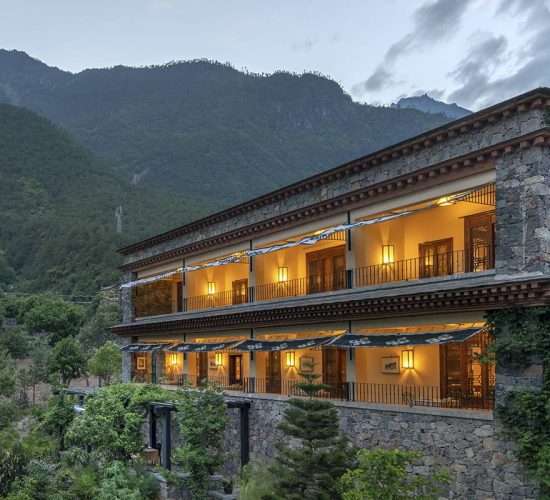
 

The exterior of Songtsam Cizhong Lodge against a mountain backdrop

Songtsam Cizhong Lodge

Local Boutique

Experience the convergence of history and culture at Songtsam Cizhong Lodge, where the echoes of 150-year-old Catholic missions meet breathtaking landscapes.
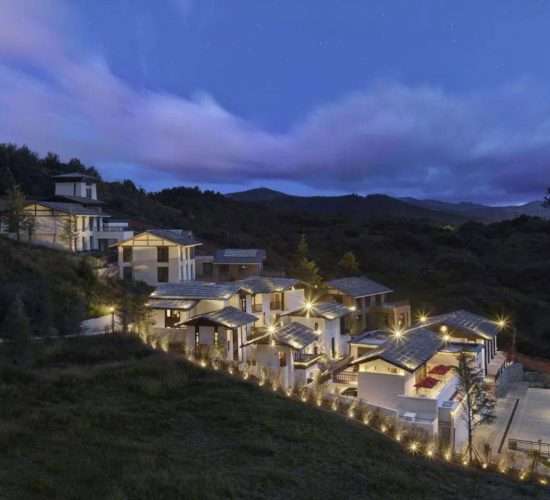
 

LUX* Tea Horse Road Shangri-La illuminated at dusk in Dukezong Old Town

LUX* Tea Horse Road Shangri-La

Luxury Boutique

Set on a hillside in Dukezong Old Town, LUX* Tea Horse Road Shangri-La blends Tibetan-inspired design with contemporary comforts, including in-room oxygen systems.


Details

Seasonal Availability

September – November

What’s Included

  • Services of a WildChina English-speaking guide, as noted in the itinerary
  • All on-ground transfers with in-transport refreshments
  • Service of the WildChina Hiking Assistant Team in Day 3-6, as noted in the itinerary
  • All accommodation costs, based on double occupancy, as noted in the itinerary
  • All admission fees and expenses, as noted in the itinerary
  • Meals that are noted in the itinerary

What’s Excluded

  • Flights and relevant taxes
  • Chinese tourist visa, which is required for most foreign passport holders
  • Travel and medical insurance
  • Alcohol and meals not included in the itinerary
  • Expenses of a personal nature (e.g. mini bar, personal telecommunications, laundry, etc.)
  • Excursions and activities not included in the itinerary
  • Discretionary gratuities for guides and drivers
Next Steps

How do I book this tour?

Please use the inquiry form on the right-hand side of this page or email [email protected] to get started. One of our travel designers will be in touch accordingly to start the process of planning your custom China trip! 

What is the payment schedule?

1. Deposit:

Once you are ready to book, a deposit equivalent of 20% of the total trip cost is required to begin reserving your arrangements. This will go towards your total trip costs and will be taken off your final balance amount.

2. Full payment:

Full trip payment will be requested 60 days prior to departure. If you’re booking within 60 days of your departure, you may be asked to pay make the full payment straight away.

Payments can be made via credit card, bank transfer, WeChat or Alipay.


What is your cancellation policy? 

What should I prepare for hiking and camping?

For detailed information on what to prepare for hiking and camping, please refer to our FAQ page.


Why WildChina

We’re on the ground with you

During the planning phase, our team of specialist travel advisors based in China will design every detail of your trip with you. When you’re on the ground, they will then orchestrate your entire journey, maintaining close contact with each of your guides throughout your trip to ensure you’re having the best journey possible. With offices in Beijing, Shanghai and Chengdu, and an expansive network of operational partners across the country, we are committed to ensuring that your journey is safe, reliable and comfortable from beginning to end. 

Your trip, your way

Flexibility is our highest-ranking complement. With over two decades of experience, we’ve run just about every type of journey you can imagine. No request is too strange, too extreme, or too exclusive. Our team regularly pulls off unprecedented logistical feats; nearly any time frame or budget is within our realm. No matter how you wish to experience China, we are here to bring that dream to life. 

We embody passion

WildChina’s guides are carefully handpicked for their knowledge and charisma, then meticulously trained to maintain our exceptional service standards. They are expert storytellers and passionate natives of the regions where they guide, having the perfect combination of local insights and service know-how to bring you seamless once-in-a- lifetime moments all across China. 

The little things, the big picture

We firmly believe that supporting local people and economies allows you to experience the soul of a destination, while also protecting and cultivating China’s cultures. From watching artisans’ hand–make shoes in Yunnan, to picking organic vegetables for dinner on a local farm in Fujian, our tours are designed to showcase and protect China’s heritage, both natural and human.