Food and Drink
 Shopping
 Transportation
 Accommodation
 Useful Tips
 By Destination
 By Interests
 Pre-departure Guides
 Travel Updates


There was a time when palm-fiber bed makers were a common sight in Songyang. At the height of the trade, more than 20 workshops operated in the county town, making traditional woven beds for households across the region. Master Huang Weibing remembers those busy years well. His own workshop once produced between 200 and 300 beds a year, with five or six people helping to keep up with orders. Today, he is the only one in Songyang still practicing the craft.
For more than 50 years, Huang has made zongbeng, traditional beds crafted from hand-spun palm fiber stretched across wooden frames.
Learning the trade
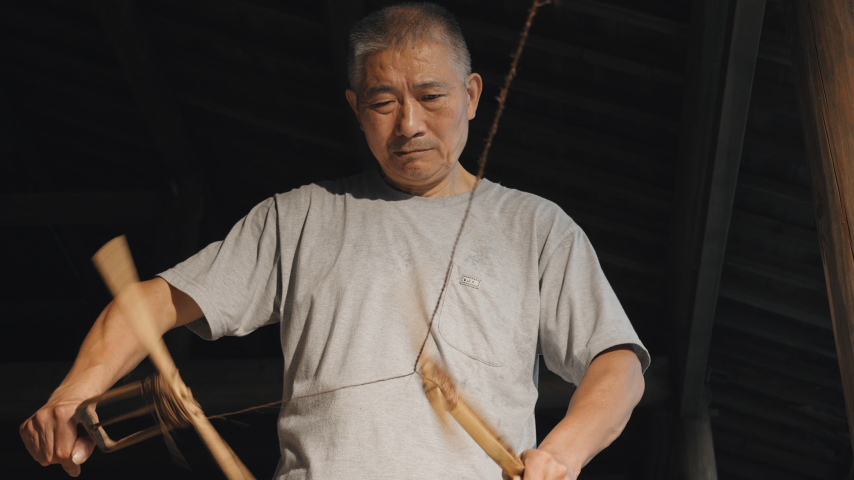
In 1975, Huang’s father arranged for him to leave home and become an apprentice. He was still in his early teens, at a time when many children in rural China were expected to begin earning their own living. His father found him a master through a family connection, and on the fifth day of the Lunar New Year, Huang left home to begin learning the trade.
The work was demanding. During summer, his days began at six in the morning and continued until seven in the evening. He returned home only occasionally, usually for the New Year. For the first year and a half, Huang did not weave a single bed. Instead, he learned to prepare palm fiber and spin it into cord before moving on to weaving.
Huang learned much of the craft simply by watching his master at work. He studied his movements, repeated them and gradually worked out the finer details himself. Occasionally, he would receive guidance on more complicated techniques, such as creating the diamond-shaped pattern or finishing the weave, but most of what he learned came through hands-on practice.
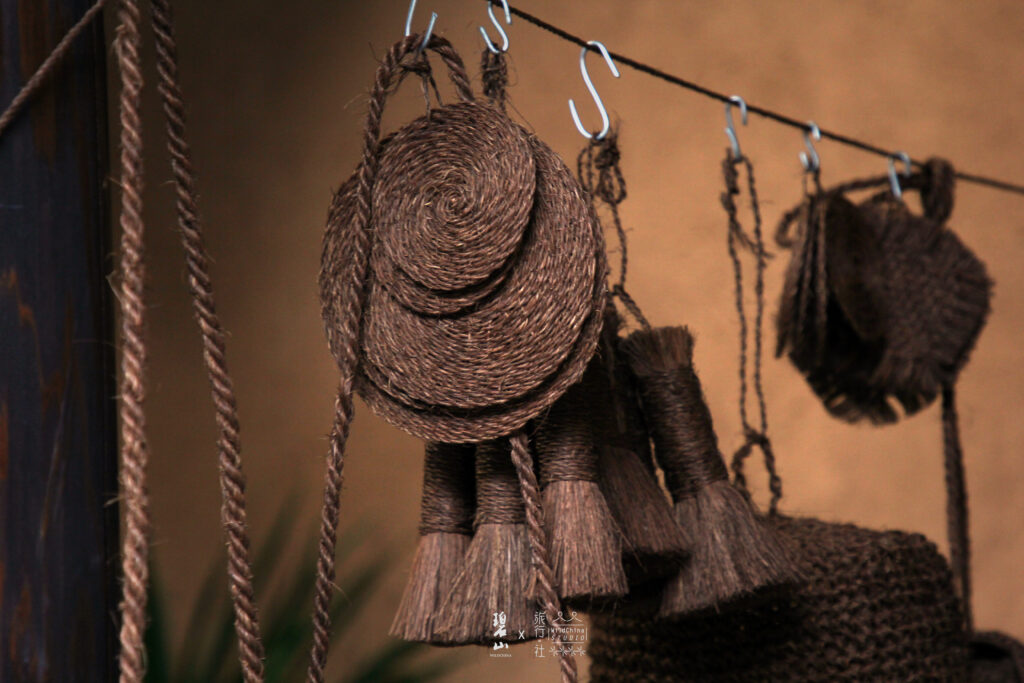
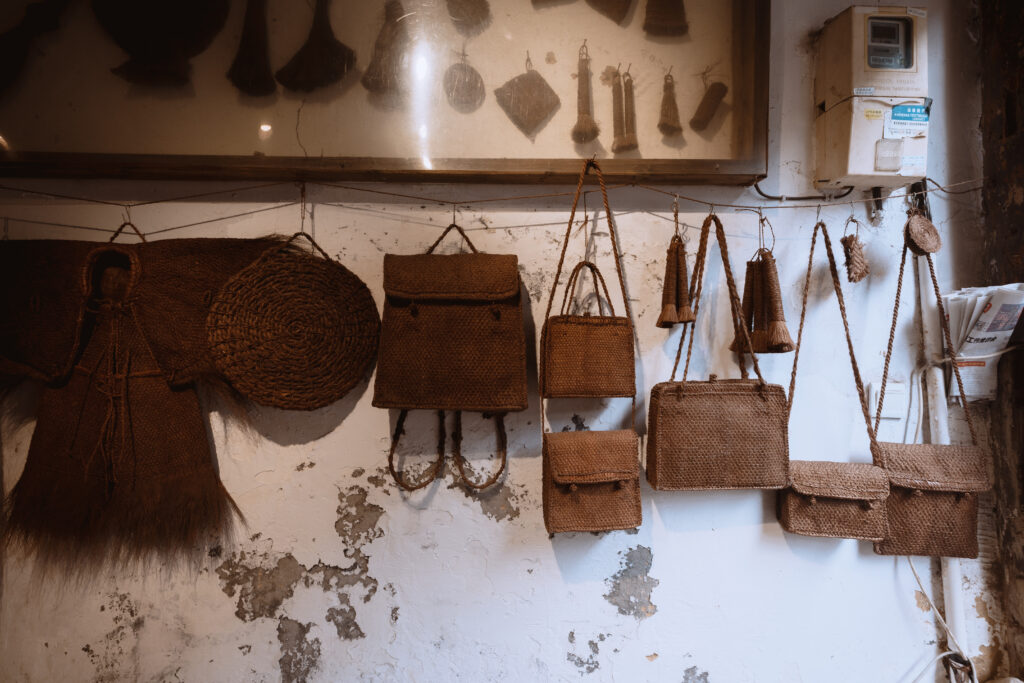
After three years as an apprentice and another year assisting his master, Huang returned to Songyang and opened his own shop on Nanzhi Street. He initially worked with help from his family, and later alongside his wife, Wu Jinmei. As business grew, he took on apprentices and additional workers. In 1987, he moved to his present workshop on Renmin Street, where he has remained ever since.
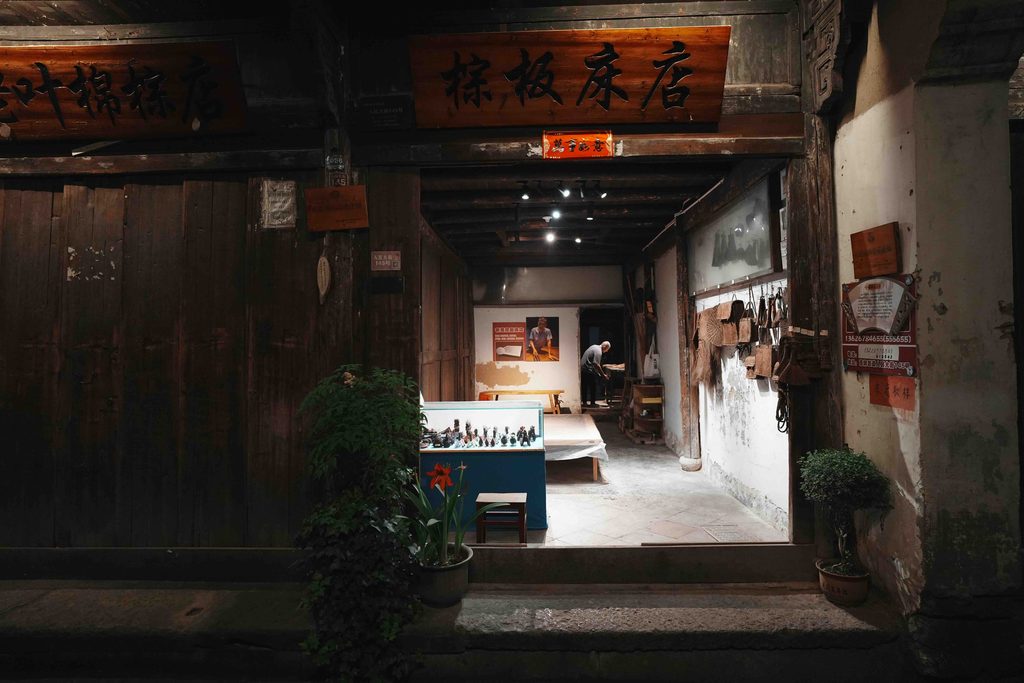
Twenty days, one bed
A traditional palm-fiber bed begins with the fibers themselves. In the past, Huang often traveled to customers’ homes to make their beds. Families in the surrounding mountains grew and harvested their own palm material, preparing it for his arrival. Once there, Huang would begin the lengthy process of turning the raw fiber into usable cord.
The fibers are cleaned, separated into fine strands and twisted together to form strong cords. A bed measuring 1.8 meters requires approximately 7.5 kilograms of palm cord. For one person, the entire process can take around twenty days, with ten spent preparing the cord and another ten weaving the bed. Working together, Huang and his wife could complete the same work in roughly half that time.
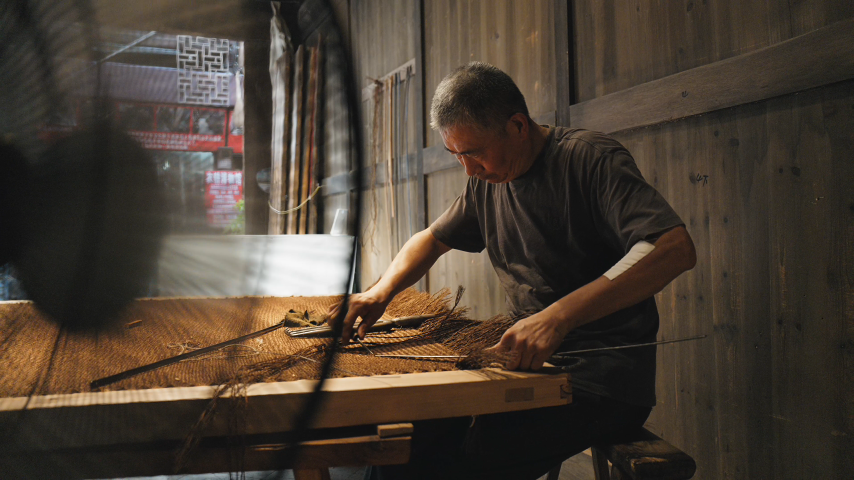
Once the wooden frame is ready, Huang begins weaving from the corners toward the center, creating the distinctive diamond-shaped pattern. He compares the precision required to planting rice seedlings by hand: each strand must be evenly spaced and pulled to the right tension. The final section is the most difficult, as the cords become increasingly tight. Huang recalls days when he could complete only a handful of strands, a reminder of the patience required to make a bed that will last for decades.
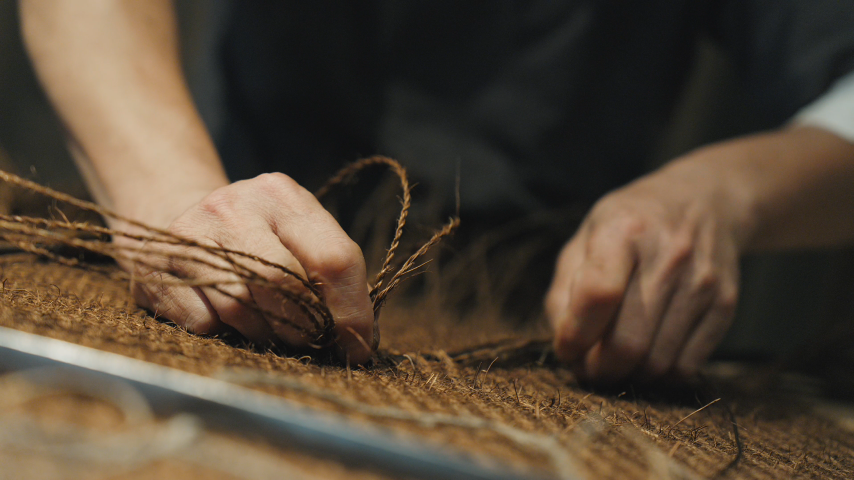
A changing trade
By the turn of the millennium, Huang’s workshop was thriving, but around 2005, orders began to decline. Modern mattresses and factory-made alternatives were becoming more widely available, though Huang points to another reason for the industry’s decline: the beds were simply made to last.
A well-made palm-fiber bed could remain in use for many years, meaning customers rarely needed a replacement. As the market became increasingly saturated, workshops began closing and makers moved into other trades.
Huang believes workmanship also played a part in determining which businesses survived. Customers could recognize the difference between a carefully woven bed and one made in haste, and those who struggled to maintain the same standard found it harder to compete. Huang continued making beds as demand declined, relying on the skills he had spent decades developing.
What comes next
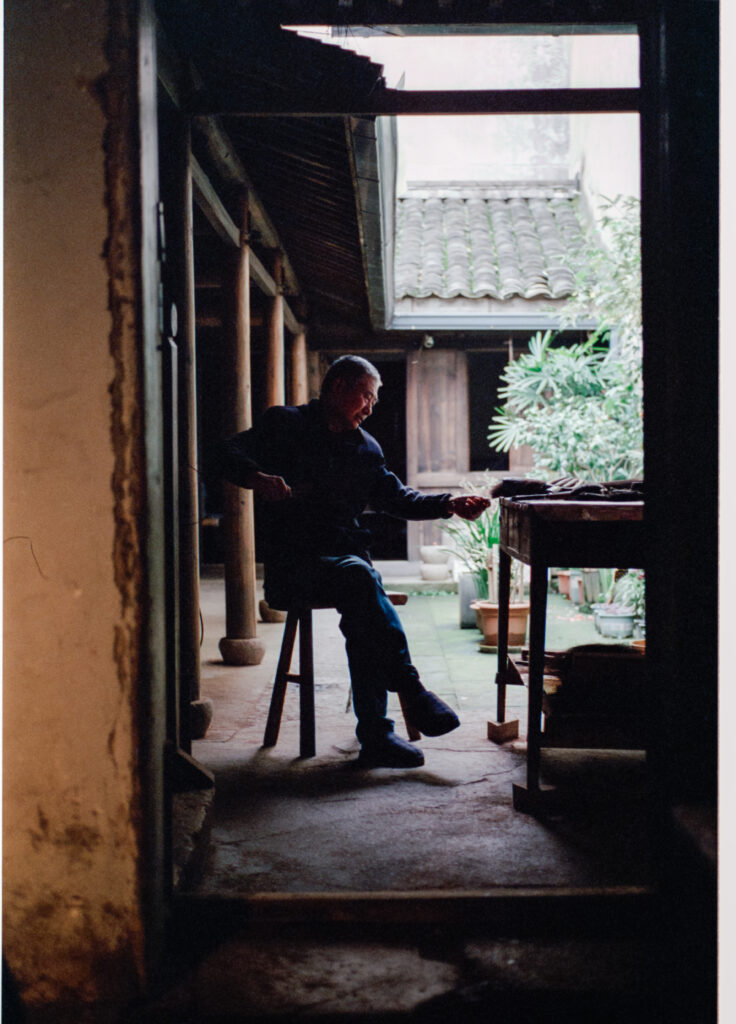
After more than 50 years in the trade, Huang hopes to continue making palm-fiber beds for another three to five years. He is also exploring smaller handmade products that use the same traditional techniques, finding new ways to put his decades of experience to use. For now, he remains the last palm-fiber bed maker in Songyang.
Part of our Made in China series.
Cinematography & editing: Charles Zhu
Article & subtitles: Gabrielle Keepfer
Special thanks: Master Huang Weibing
Music: “Undertow” by Scott Buckley
Licensed under CC BY 4.0: https://creativecommons.org/licenses/by/4.0/
https://www.scottbuckley.com.au/