Food and Drink
 Shopping
 Transportation
 Accommodation
 Useful Tips
 By Destination
 By Interests
 Pre-departure Guides
 Travel Updates


Visitors to China might expect their first encounter with Traditional Chinese Medicine (TCM) to take place in a clinic or inside a historic herbal pharmacy. Increasingly, though, that is no longer where the journey begins.
Across Shanghai, TCM is appearing in places that do not resemble medical spaces at all, from contemporary food studios and dessert shops to cocktail bars. These venues are not replacing professional care. Instead, they are offering a different way in, helping younger generations in China and curious visitors explore the ideas, ingredients and traditions behind TCM through everyday experiences.
The studio built around the dining table: Silver Root Apothecary
In Shanghai’s Former French Concession, Silver Root Apothecary occupies a converted residence, its long, pared-back interior blending the atmosphere of a contemporary kitchen with that of a traditional Chinese apothecary. A communal table sits at the center of the studio, with its arrangement shifting according to the day’s program. It may be set with portable burners, clay pots and culinary herbs for a cooking workshop, or prepared for tea, consultations and conversations about food therapy.
The space was founded by Shanghai-born registered dietitian and food therapist Zoey Xinyi Gong, who studied nutrition at New York University and worked as a private chef before returning to Shanghai in 2024.
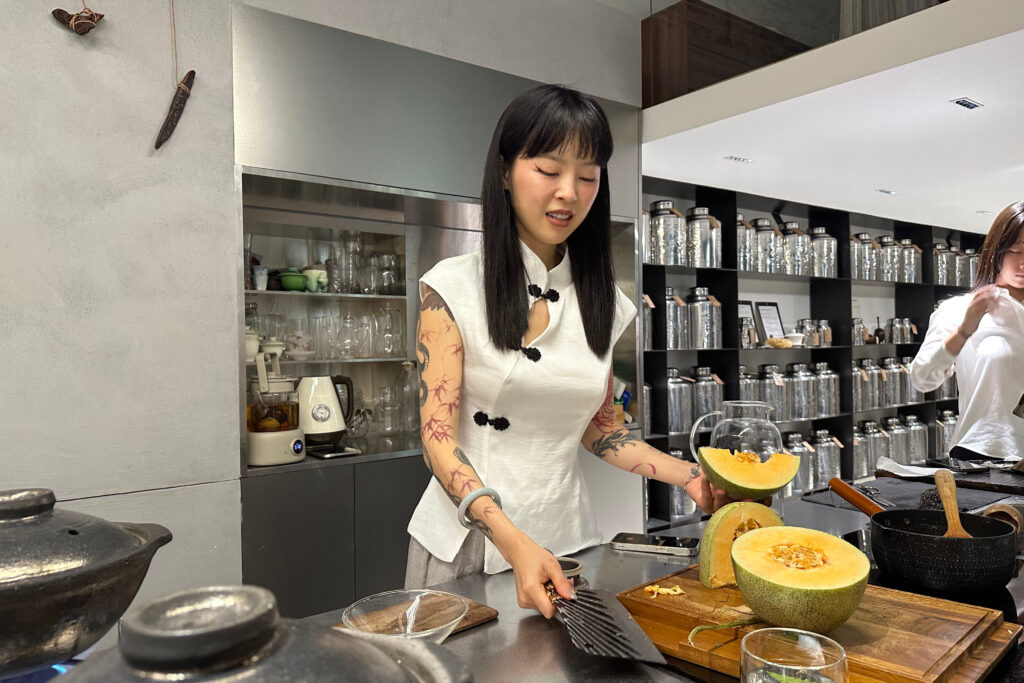
Her classes explore yao shi tong yuan, the principle that medicine and food share the same origin. Participants learn how the properties of everyday ingredients are understood in relation to a person’s constitution and the changing seasons. Zoey draws attention to nutritional knowledge embedded within traditional cuisine, exploring what to eat, when, and why.
The medicine hall reimagined as a gelato shop: Zhongyaotang
For anyone familiar with TCM dietary theory, ice cream may seem an unlikely way to introduce Chinese herbal culture. Very cold foods are often approached with caution because they are believed to put strain on the digestive system. On tree-lined Xiangyang South Road, however, Zhongyaotang—its name meaning “Chinese medicine hall”—embraces that tension, pairing a globally familiar dessert with ingredients encountered in local family kitchens.
The menu includes black sesame tangyuan (sweet dumpling), black glutinous rice, ginger and cinnamon, and yam with wolfberry. Seasonal flavors also appear throughout the year, including limited-edition creations such as Pineapple Maté Tea Gelato and an herbal cola drink. Its most divisive flavor is dang gui, or Chinese angelica. The medicinal aroma arrives first, followed by notes of coffee and toffee, before the herbal character takes over.
Other flavors draw on more personal memories. Founder Wu Xiu Yu’s hawthorn gelato was inspired by childhood visits to TCM pharmacies, where children were often given dried hawthorn after a consultation. Seasonal additions follow China’s 24 solar terms, while each new recipe undergoes more than 100 formulation tests and is reviewed by TCM consultants before reaching the counter. The gelato is not presented as a treatment; it takes ingredients that may seem medicinal, bitter or old-fashioned and presents them in a familiar, playful form.
The bar where the menu begins with a pulse: Zhihe
At Zhihe, guests are presented not with a drinks list, but with a pulse reading. A licensed TCM practitioner places three fingers on a guest’s wrist, asks a series of questions and records the findings on a slip of paper. That slip is then passed to the bar, where bartenders use the findings to prepare a personalized cocktail or non-alcoholic drink with herbs, tinctures and spirits.
Opened in 2025 by students from Shanghai University of Traditional Chinese Medicine, Zhihe brings together trained practitioners and bartenders focused on flavor. Recipes are reviewed by TCM advisors affiliated with the university, while ingredients are selected from China’s approved list of substances that may be used as both food and medicine. The result is an experience that sits somewhere between consultation, a performance and a night out.
Zhihe’s bar manager, Xue Tiaoyi, describes the team as “cultural translators”, using an unexpected setting to make unfamiliar ideas more accessible. Pulse readings, herbal ingredients and concepts such as body constitution become part of a social experience, opening conversations that might never begin in a clinical setting.
The practitioner who brings the ideas together: Dr. Evan Pinto
Where the earlier experiences introduce individual ingredients and practices, Dr. Evan’s session reveals how they fit within a complete system of thought. Dr. Evan Pinto has lived and practised in Shanghai since 2012. Trained in New York and Beijing, he later interned at Shanghai’s Shuguang Hospital and lectured for four years at the Shanghai University of Traditional Chinese Medicine.
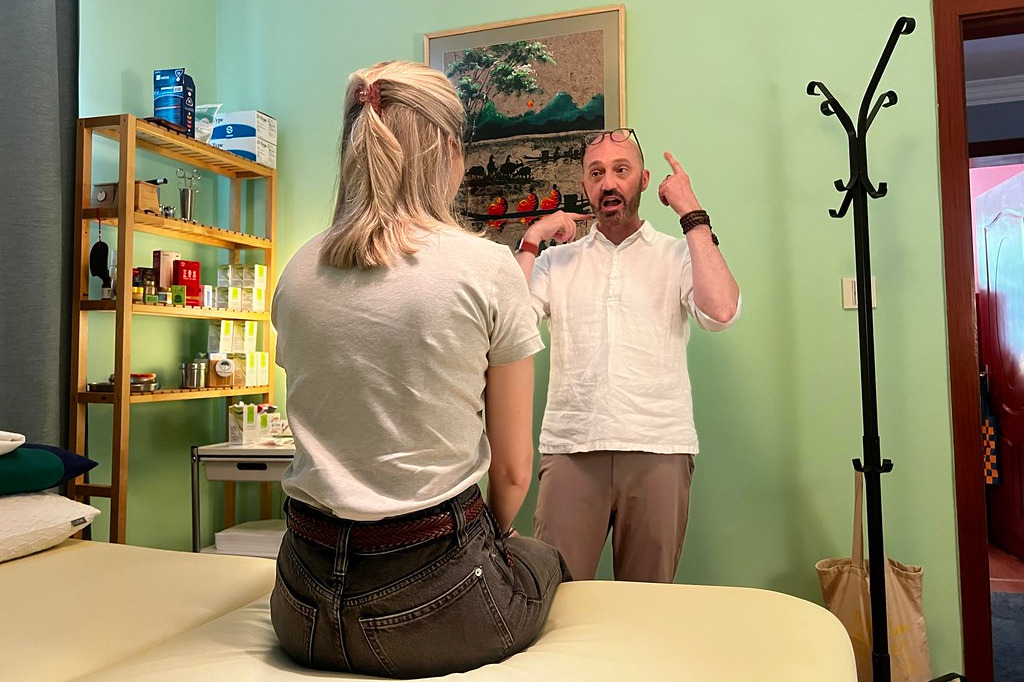
During WildChina’s private two-hour session at his home practice, Dr. Evan introduces guests to the foundations of TCM, including Yin and Yang, the Five Elements, meridian pathways and traditional concepts of the body and organ systems.
Guests also experience auricular acupressure, with small seeds placed on points around the outer ear to demonstrate one practical element of the system. The session connects the ideas encountered elsewhere in the city. It places food therapy, herbal ingredients and pulse diagnosis within the wider medical philosophy from which they emerged.
These places show how Traditional Chinese Medicine continues to find new expression in Shanghai without losing sight of its foundations. For travelers, the journey into TCM may begin with a meal, a scoop of gelato or an evening drink. Its deeper value lies in discovering how one of China’s oldest medical traditions continues to shape the way people eat, gather and think about wellbeing today.
Get in touch with our travel designers to plan your own journey through Shanghai, or explore our tours for more inspiration.
For those interested in how TCM principles extend beyond food and wellness into skincare and personal care, check out our guide to C-Beauty.
By Gabrielle Keepfer